
7 min read · Blades Pest Solutions
Finding bees flying in and out of your chimney, wall or roof can be unsettling, but bees are not pests in the way rats or wasps are. They are vital, beneficial pollinators, and most of the time the right answer is to protect them, not destroy them. The single most important first step is simply to work out what you are actually dealing with, because a calm colony of honey bees deserves a very different response from an aggressive wasp nest. Acting thoughtfully early on, before a swarm settles into a deep cavity, also keeps your options open and usually makes any eventual relocation far simpler.
Signs of a bee problem
Bees announce themselves in fairly predictable ways. The classic signs are:
- A steady stream of bees flying in and out of a single fixed point, such as a gap in the brickwork, an air brick, a soffit, the eaves or the top of a chimney pot.
- In spring, scout bees hovering and circling around a potential nest site for a few days, often followed by a swarm arriving as a large, noisy cloud, typically mid-morning to early afternoon.
- A distinct humming or buzzing heard behind plasterwork on warm days, which points to an established honey bee colony in a wall cavity or chimney.
- Wax and honey softening in hot weather and staining through a ceiling or wall, a clear sign of a substantial colony inside the structure.
- Small, neat holes in soft mortar joints with little piles of dust below them, which indicate solitary masonry bees rather than honey bees.
- Smaller, looser nests in compost heaps, lofts, bird boxes or under decking, which are usually bumblebees.
Why bees can be a risk
It is important to be honest here: most of the time, bees pose very little danger. They are generally docile and will only sting when they feel the nest or themselves are genuinely threatened. The real concerns are narrower than people fear, and they fall into two groups.
The first is health. A sting causes a painful local reaction for most people, but in a minority it can trigger a severe allergic, or anaphylactic, response that needs emergency treatment. Any sting near the face or mouth, or any sting in someone with a known bee-venom allergy, should be treated as a medical priority. This is why the location of a nest matters so much in settings such as schools and care homes, where a nest right beside a busy doorway used by children or vulnerable, less mobile people changes the calculation.
The second, and often the bigger practical issue, is your property. A large honey bee colony left in a chimney or wall cavity builds substantial honeycomb. In warm weather the wax and honey can melt, seep through and stain ceilings, plaster and brickwork. If a colony later dies out and the comb is left in place, it can attract wax moths, ants and other secondary pests and start to produce odours. None of this is a reason to panic, but it is a reason to deal with an established colony properly rather than ignore it for years.
Can you get rid of bees yourself?
For many bee situations, the best DIY action is no action at all. A bumblebee nest in a bird box or under the decking is harmless, short-lived and gone by the end of the season. A solitary masonry bee leaving tidy holes in old mortar is not damaging your wall in any meaningful way. Leaving these nests undisturbed is usually the kindest and most sensible choice, and it costs you nothing.
If a swarm has settled in your garden, the right response is to stay calm and avoid sudden movements. Swarming bees are usually non-aggressive because they have no nest or stores to defend, and a swarm in the open will often move on within a day or two on its own. The one thing you should not do is reach for a can of insecticide. Spraying bees is both ethically wrong for a beneficial species and, in the case of honey bees, not even something any approved product permits. Shop-bought sprays are designed for wasps, tend to enrage rather than resolve a colony, rarely reach bees deep inside a cavity, and can leave you facing a stained ceiling and an angry, half-treated nest. They also throw away the far better option of having a beekeeper collect the bees alive. In short, DIY has a real place with bees, but that place is identification, patience and leaving harmless nests alone, not extermination.
The safest, most responsible way to deal with bees
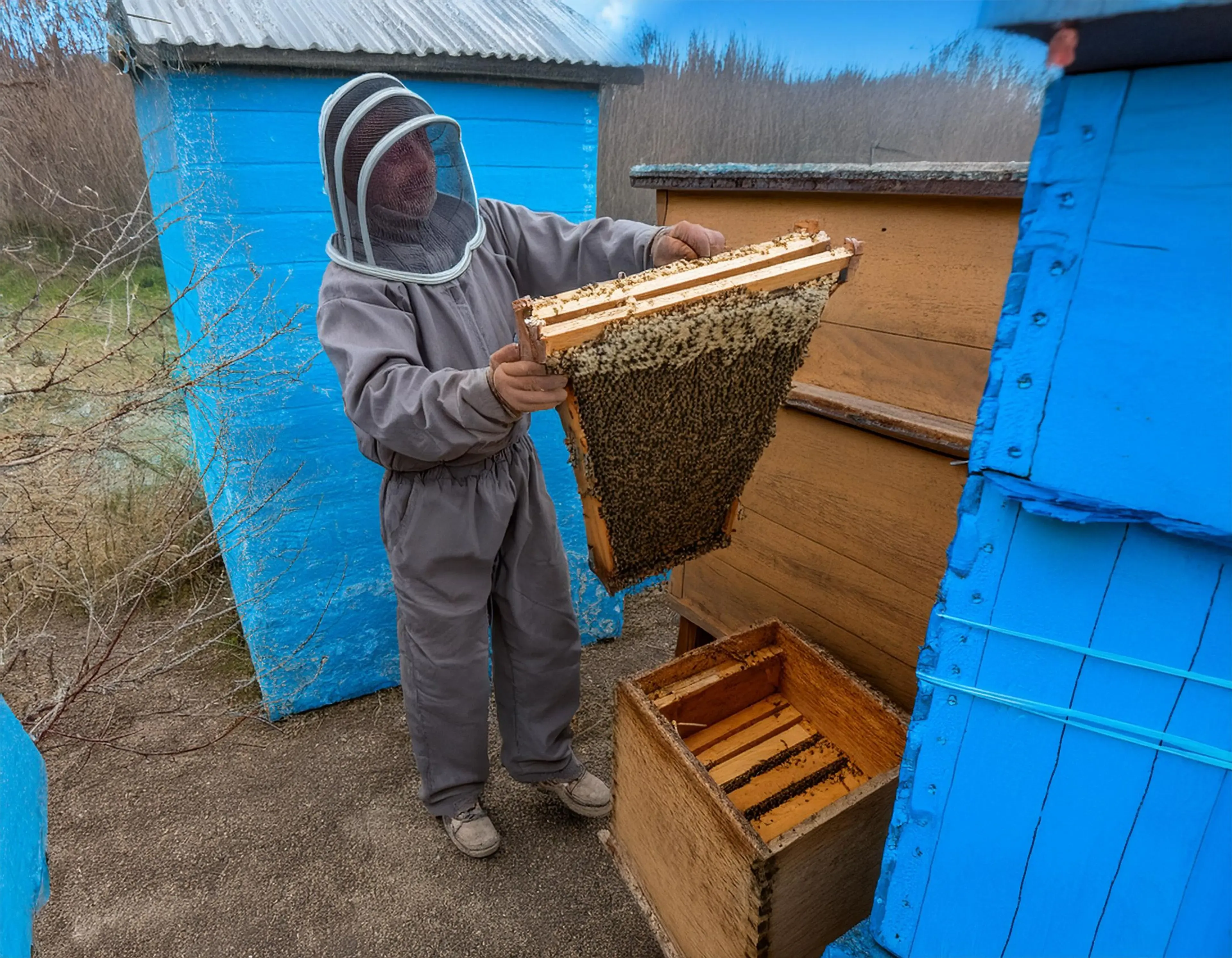
Our approach puts safety and conservation first. Wherever it is practical, we work with local beekeepers to relocate bee swarms and nests alive. A honey bee swarm hanging in the open can very often be collected free of charge by a beekeeper, and the British Beekeepers Association swarm collectors are the right first port of call for that. For a colony that has established itself inside a structure, a professional assessment establishes the type of bee, exactly where the nest sits and how accessible it is, so the best route can be chosen calmly and on the facts.
Control is only ever considered as a genuine last resort, in the narrow situation where there is a real and immediate risk, for example to vulnerable people, and live relocation simply is not viable. Even then, removing an established colony from a chimney or cavity wall properly involves taking out the comb and proofing the entry points so the space cannot be re-occupied, rather than just spraying and walking away. If you want to understand the full picture for an in-structure colony, take a look at our bee control service, and call us before you do anything irreversible.
Preventing bees from nesting
Prevention with bees is gentle and structural rather than chemical. The aim is simply to make the cavities they like less available:
- Regularly inspect likely nesting spots, particularly in spring and early summer when swarming peaks.
- Seal cracks and holes in walls, soffits and roofs once you are certain no nest is currently in use, so a future swarm cannot move in.
- Re-point crumbling mortar, which is the proper long-term answer to recurring masonry bees rather than any treatment.
- Keep sweet foods and drinks covered when you are outdoors so bees are not drawn close to people.
The law and your duty of care on bees
There is a strong duty of care to preserve honey bees, which are essential to food production and biodiversity, and the UK is home to over 250 species of bee in total. No insecticide is approved for use on honey bees, so wherever it is practical a honey bee swarm or colony should be collected and relocated alive by a beekeeper or swarm collector rather than destroyed. Bumblebees and solitary or masonry bees are similarly beneficial and are best left undisturbed where possible. While there is no specific statutory protection making it an offence to control bees in the way that protects most wild birds, responsible practice and the safe, lawful use of any approved product always apply, and we will never destroy honey bees where relocation is a realistic alternative.
Get honest expert help
If you have bees at your property and you are not sure what to do, the best thing you can do is talk to someone who will give you straight advice rather than a sales pitch. Blades Pest Solutions is RSPH-qualified and fully insured, we offer same-day and 24/7 response, and we work with local beekeepers to relocate honey bees alive wherever it can be done safely. We will identify what you have, explain your options plainly, agree a clear plan with you, and we are confident in our work. Whether the answer is a beekeeper collection, simple proofing, or doing nothing at all and leaving a harmless nest in peace, call us on 0800 037 7358 for free, no-obligation advice and a fair price.
FAQs
- How do I know if I have bees or wasps?
- Bees are robust and hairy, ranging from golden-yellow to black, and you will usually see them calmly working flowers for pollen. Wasps are slimmer, smoother and brighter yellow-and-black, and become far more aggressive around their nest in late summer. Getting this right matters because honey bees should be relocated alive, not destroyed. If you are unsure, call us on 0800 037 7358 and we will help you identify what you have.
- Will Blades kill honey bees?
- No. Honey bees are vital pollinators and there is a strong duty of care to preserve them. No insecticide is even approved for use on honey bees. Wherever it is practical we work with local beekeepers to collect and relocate a swarm or colony alive, and we only consider control as a genuine last resort where there is a real risk to vulnerable people and relocation simply is not viable.
- There is a swarm in my garden. What should I do?
- Stay calm and keep your distance. A swarm in the open is usually docile and often moves on within a day or two. Do not spray it. Honey bee swarms can frequently be collected free of charge by a beekeeper, so contact the British Beekeepers Association or call us for honest advice on the best next step.
- Can I just leave a bee nest alone?
- Often, yes. Bumblebee and solitary bee nests are small, harmless and short-lived, and the kindest thing is usually to leave them in peace until the season ends. The main exceptions are a large honey bee colony established inside a chimney or wall, or any nest right beside a doorway used by vulnerable people, where we would talk you through the options.
- How much does bee removal cost?
- It depends on the type of bee, where the nest is and whether it is a straightforward live relocation or a more involved removal from a chimney or cavity wall. Rather than quote a figure blind, we give free, no-obligation advice and pricing once we understand your situation. Call us on 0800 037 7358.