
7 min read · Blades Pest Solutions
Fleas are one of those pests that announce themselves the hard way: a row of itchy red bites around your ankles, or a pet that suddenly can't stop scratching. By the time you've noticed, the problem is rarely confined to the animal. Fleas breed at speed, laying up to 50 eggs a day, and a small issue becomes an established infestation in a matter of weeks. The single most important thing to understand is that acting early, and treating the pet and the home together, is the difference between a quick clear-up and a frustrating cycle of bites that never quite ends.
Signs of a flea problem
Fleas are small, but they leave clear evidence once you know what to look for. Watch for:
- Itchy bites in clusters around the ankles and lower legs. Adult fleas can only jump so high, so human bites tend to gather low down rather than spread over the body.
- Tiny reddish-brown insects, 1-3mm long, leaping out of carpets or off your pet's coat when you part the fur.
- "Flea dirt" - black, gritty specks of digested blood on pet bedding, sofas or skirting boards. Smear it onto damp white tissue and it dissolves into a rusty-red halo, which confirms fleas.
- A pet scratching, biting or licking itself excessively, often with live or dead fleas visible in the fur. This is usually the very first clue.
One detail matters more than any other: only around 5% of a flea population is ever on the animal at one time. The remaining 95% lives hidden in your home as eggs, larvae and pupae, tucked into carpets, rugs, upholstery and the gaps between floorboards. That hidden majority is exactly why fleas are so hard to shift with surface cleaning alone.
Why fleas are a risk
For most households flea bites are more of a persistent nuisance than a serious danger, but they should not be brushed off. The bites cause itchy, swollen red spots, and constant scratching can break the skin and open the door to a secondary bacterial infection. Some people and pets develop flea allergy dermatitis, an allergic reaction to flea saliva so strong that a single bite triggers intense itching, hair loss and inflamed skin in animals.
There is a health angle beyond the irritation, too. Fleas can transmit the tapeworm Dipylidium caninum to cats and dogs - and occasionally to young children - if an infected flea is swallowed during grooming. They have also been linked to bacterial infections such as cat-scratch disease. Fleas don't chew wiring or timber, so they won't damage the structure of your home the way rodents do, but they are stubbornly persistent: they reinfest furniture, carpets and bedding, and they are genuinely difficult to clear without treating both the animal and the environment it lives in.
For businesses where animals and the public meet - pet shops, grooming salons and veterinary clinics among them - the reputational stakes are higher still. A flea problem on the premises spreads quickly between animals, unsettles customers and undermines confidence in your hygiene standards, so it needs handling decisively.
Can you get rid of fleas yourself?
You can and should take action yourself, and good housekeeping is a genuine part of the solution - but it is rarely the whole answer for an established infestation. There are three things every owner should do straight away:
- Act quickly. Fleas reproduce at a remarkable rate, so the longer you wait, the bigger the job becomes.
- Treat pets with a vet-recommended product. Your animal is the food source. Treating the home while the pet stays untreated simply restocks the infestation.
- Stay on top of hygiene. Regular, thorough vacuuming and washing of pet bedding physically removes eggs and larvae. Pay particular attention to carpets, rugs, upholstered furniture and cracks in floorboards, where fleas like to hide.
Where DIY runs into trouble is the life cycle. Fleas pass through four stages - egg, larva, pupa and adult - and the pupa is the problem. Pupae are protected inside a tough cocoon that shrugs off many shop-bought sprays, and they can stay dormant for weeks, hatching in waves long after you think you've won. That is why so many people treat the visible adults, feel relieved for a few days, then find a fresh outbreak appears as the next generation emerges. Over-the-counter products also tend to lack the residual action needed to keep killing fleas as they hatch, and used incorrectly they can be unsafe around children, pets and food-preparation areas. Cleaning and pet treatment alone will knock a problem back; they often won't finish it.
The fastest, safest way to get rid of fleas
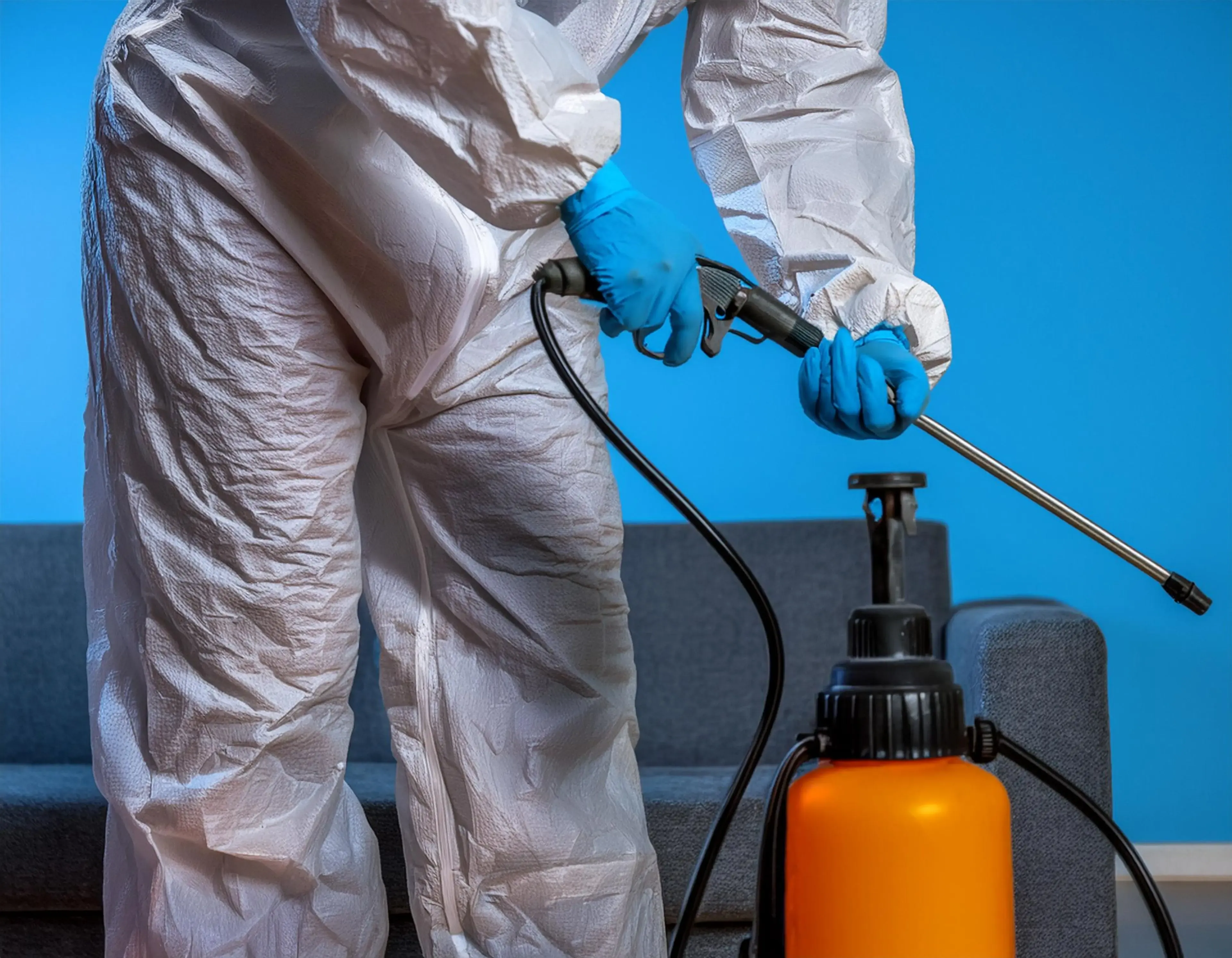
The reliable route is professional treatment that tackles the home environment in step with the pet's veterinary treatment. With our flea control service, a qualified technician assesses the spread of the infestation and then selects the right combination of methods for your property:
- Insecticidal sprays applied to carpets, furniture and other harbourage points. These kill adult fleas on contact and, importantly, leave a residual effect that goes on killing the larvae and adults emerging from pupae over the following days.
- Fogging for widespread infestations, releasing a fine insecticidal mist that reaches into cracks, crevices and hard-to-reach voids across a whole room. Treated areas need to be vacated temporarily.
- Heat treatment in some cases, raising the temperature of infested areas to a level lethal to fleas, eggs and larvae - useful for larger spaces or sensitive environments where chemical treatment isn't ideal.
- Ongoing monitoring after the initial treatment, including follow-up inspections and flea traps to confirm the problem is fully resolved. Because of the pupae, most infestations need a follow-up visit a week or two later to catch the newly hatched fleas - this timing is what breaks the cycle for good.
Done properly, with the pet treated by a vet at the same time, this is what finally clears an infestation rather than just thinning it out.
Preventing fleas
Once you're clear, keeping fleas out is mostly about routine. The two habits that matter most are treating pets regularly with vet-approved flea control products and maintaining a clean home around them. In practice that means:
- Keeping up a year-round flea-prevention regime for every pet - not just in summer.
- Vacuuming carpets, rugs and upholstery frequently, and emptying the vacuum promptly so any captured eggs can't hatch indoors.
- Washing pet bedding regularly on a hot wash, along with throws and covers from the places your pets sleep.
- Paying attention to skirting boards, floorboard gaps and the spots where pets rest, which are the classic flea hideouts.
A note on timing: fleas are most active from late spring through to early autumn, but many UK homes see their worst infestations in autumn as fleas move indoors for warmth. Crucially, central heating keeps modern homes warm enough for fleas to breed all year round, so this is not a problem that politely waits for summer. Treating at the very first sign, rather than hoping "flea season" will pass, stops a minor irritation becoming an entrenched infestation.
The law on fleas
Fleas have no specific legal protection in the UK - there's no statutory duty relating to them and no licence is needed to control them. What is regulated is how treatment is carried out. Any insecticide must be used in line with the safe, responsible and legal use of approved pesticides under the Control of Pesticides Regulations and COSHH, applied strictly to the label and only where it's authorised. A qualified, insured technician will choose the correct approved product and apply it safely around children, pets and food-preparation areas - and, where pets are the source, will make sure home treatment is combined with proper veterinary treatment of the animals to break the cycle and prevent reinfestation.
Get expert help
If you've spotted the bites, the flea dirt or a pet that won't stop scratching, don't let it settle in. Blades Pest Solutions provides same-day and 24/7 flea control across Ipswich, Suffolk and north Essex, with UK-wide cover for commercial clients. We're RSPH-qualified and fully insured, we treat your home in step with your pet's veterinary treatment, and we agree a clear plan with you from the outset - we're confident in our work and we see it through. For a free, no-obligation price tailored to your property, call our freephone line on 0800 037 7358.
FAQs
- How do I get rid of fleas fast?
- Treat the pet and the home at the same time. Worm and treat your animal with a vet-recommended product, then have your home professionally treated so the eggs, larvae and pupae hidden in carpets and bedding are dealt with too. A single shop spray rarely clears an established infestation. Blades offers same-day and 24/7 call-outs across Ipswich, Suffolk and north Essex.
- Why do fleas keep coming back after I treat them?
- Because only around 5% of a flea population is the adults you see on your pet. The other 95% are eggs, larvae and pupae buried deep in carpets, rugs and floorboards, and the pupae can lie dormant for weeks before hatching. If you only treat what you can see, a fresh wave hatches days later. Professional treatment uses residual products timed to catch those emerging fleas.
- Are flea bites dangerous?
- For most people flea bites are an itchy nuisance rather than a serious danger, but scratching can break the skin and cause a secondary infection. Some people and pets develop flea allergy dermatitis, an intense reaction to flea saliva, and fleas can pass the tapeworm Dipylidium caninum to pets and occasionally to young children. It's worth treating promptly.
- Do I need to treat my pet as well as my house?
- Yes, always both. The pet is the food source and the home is the nursery. Treat your animal with a vet-recommended flea product and have the home treated professionally at the same time. Doing one without the other simply lets the cycle restart.
- How much does professional flea treatment cost?
- It depends on the size of the property, how many rooms are affected and whether a follow-up visit is needed. We don't quote blind. Call our freephone line on 0800 037 7358 for a free, no-obligation price tailored to your home.