
7 min read · Blades Pest Solutions
A wasp nest near your home or business is not a problem that fixes itself, and it rarely stays small. A lone queen starts a modest nest in spring, but by late summer that same nest can hold thousands of workers, all primed to defend it. The longer you leave it, the larger, busier and more aggressive the colony becomes - and the greater the risk to your family, your staff or your customers. Acting early, while the nest is smaller and easier to deal with, is the difference between a quick, controlled treatment and a frightening swarm at the worst possible moment.
Signs of a wasp problem
The earliest warning is usually movement rather than the nest itself. If you see a steady, repeated stream of wasps flying to and from one fixed point on the building, that is the tell-tale sign of an active nest behind it.
- A constant flight path to and from a single spot - a gap under the eaves, an airbrick, a roof tile, a soffit, or a hole in a shed, fence post or garden bank.
- A papery, layered nest that is grey and looks like crumpled paper or honeycomb, built from chewed wood fibres mixed with saliva.
- Faint rustling or buzzing from inside a loft, wall void or cavity on a warm day.
- A sudden rise in wasps indoors, especially around windows, lofts and kitchens, which often means a nest is being built in the building fabric nearby.
- Scavenging wasps clustering around bins, fallen fruit, fizzy drinks and outdoor dining areas in late summer.
Why wasps are a risk
This is where wasps differ sharply from many other pests, and why the urgency is real rather than exaggerated. Unlike a bee, which can sting only once, a wasp can sting repeatedly, and when a nest is disturbed or threatened, many wasps will pour out and attack together. For most people a sting means short-lived pain and swelling. For anyone who is allergic, it can trigger a severe, potentially life-threatening anaphylactic reaction, and sting allergy is responsible for a small number of deaths in the UK every year.
The greatest danger usually comes from accidentally disturbing a hidden nest - strimming a hedge, clearing a shed, working in the loft - or from attempting DIY removal of a large or awkwardly placed nest without proper protection. Property damage is generally minor, although wasps will chew and enlarge cavities and can occasionally weaken plasterboard or insulation over time.
For food businesses the stakes are higher still. Scavenging wasps around a kitchen, bar or dining area are a genuine contamination concern and a clear customer-safety problem. In a restaurant, pub or school, a single aggressive wasp at a table can empty an outdoor space fast and damage your reputation just as quickly. The timing makes it worse: wasps turn most aggressive in late summer, exactly when beer gardens, terraces and school grounds are busiest, and a colony nesting in the fabric of the building puts a steady stream of insects right where people are eating.
Can you get rid of wasps yourself?
There is sensible action you can take, and there is action you should never take. The safe DIY work is all about reducing what attracts wasps and avoiding provocation: keep food and drink covered when you eat outdoors, seal gaps around windows and doors, keep bins tightly closed and clean up spills promptly. Above all, do not disturb a nest - getting close enough to swat or poke at it provokes exactly the mass response you want to avoid.
What we strongly advise against is DIY nest removal. Shop-bought aerosols and powders often fall short on an established nest: they may only reach the wasps on the outer surface, they rarely deliver enough active product deep into the nest where the colony lives, and they leave you standing right next to thousands of defensive insects at the moment they feel attacked. A nest tucked into a roof, chimney or wall cavity simply cannot be treated safely from a ladder by an untrained person. The combination of height, hidden access and an angry colony is how people end up with multiple stings - or worse if they are allergic. Honestly, this is one job where the money and risk rarely favour going it alone.
The fastest, safest way to get rid of wasps
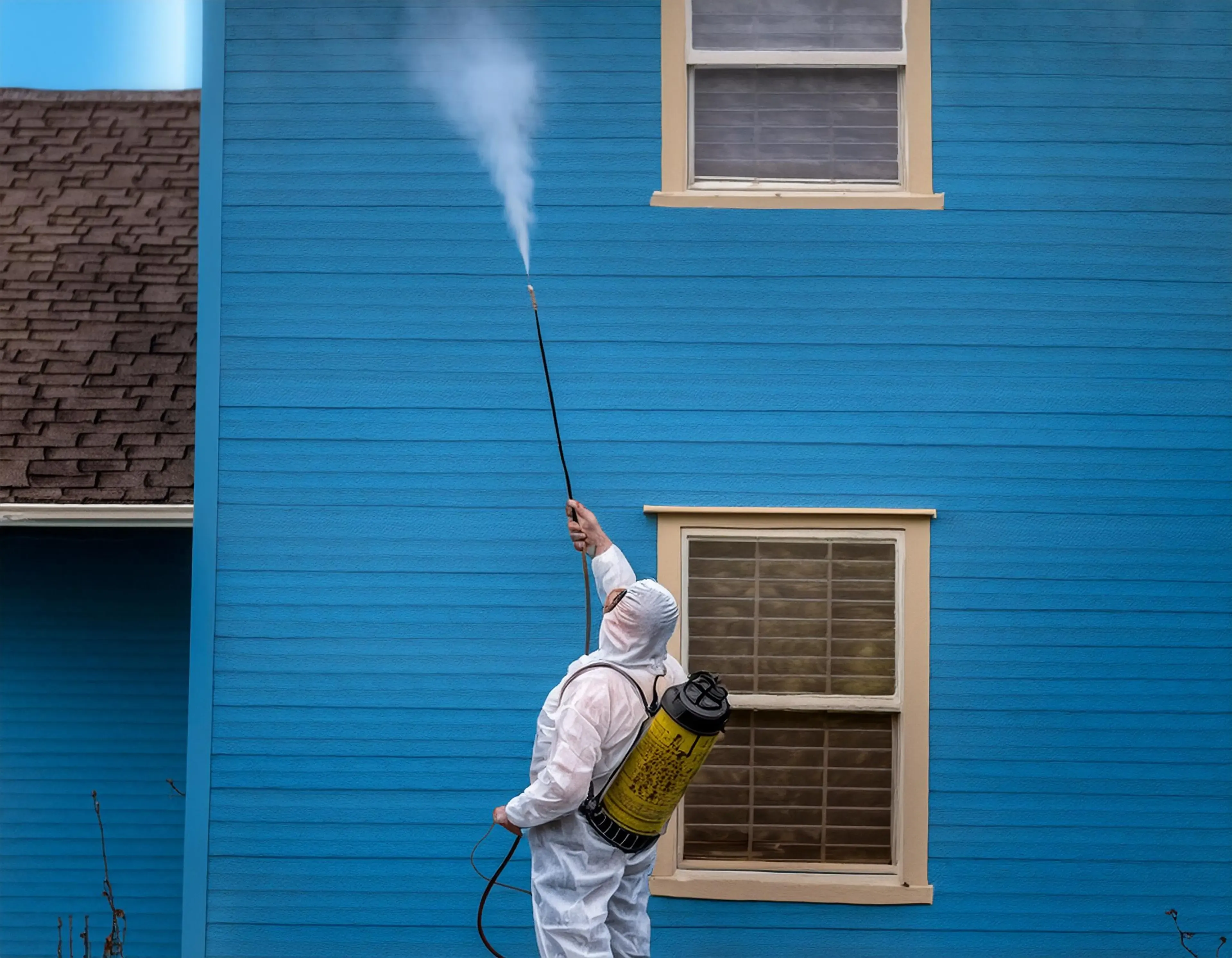
Professional treatment is quicker, more reliable and far safer. A trained technician first inspects and correctly identifies the colony, then applies a targeted, approved insecticide directly to the nest entrance while wearing proper protective equipment. The returning wasps carry the product deep inside, treating the whole colony at source rather than just the wasps you can see, and activity typically falls away within hours. Where appropriate the nest is then safely removed to eliminate the source of the problem, and the technician advises on securing potential nesting sites so the issue does not simply return next season.
This is exactly the kind of work that benefits from an RSPH-qualified, fully insured specialist using the right products applied correctly under the label. You can see the full detail of our wasp control service, including same-day and 24/7 call-outs across Ipswich, Suffolk and north Essex.
Preventing wasps
Once a nest has been dealt with, a few habits make your property far less inviting to the next queen looking for somewhere to build.
- Seal potential entry points into the building - gaps around windows, doors, eaves, soffits and airbricks where a nest can take hold.
- Keep food and drinks covered when eating or serving outdoors, particularly from late summer onwards.
- Dispose of waste properly: keep bins tightly sealed, rinse out sweet packaging and clear up fallen fruit and spills quickly.
- Check sheds, lofts, garages and quiet corners early in spring, when a new nest is still the size of a golf ball and easily resolved.
It is worth remembering that wasps are not all bad - they prey on other insects and do some natural pest control of their own. The aim is not to wage war on every wasp in the garden, but to remove a nest that has become a genuine hazard where people live and work, and then to make the building less attractive to the queens that come looking each spring.
The law on wasps and bees
Wasps have no specific legal protection in the UK, so a nest posing a risk to people may be treated without a licence. That said, all treatments must use approved insecticides applied safely and responsibly by a competent person, in line with the product label and the manufacturer's instructions. For commercial and food premises there is also a duty of care, which is another reason a professional, RSPH-qualified technician is the safest and most reliable choice.
There is one crucial exception. If an inspection reveals the colony is in fact honey bees rather than wasps, treatment must not go ahead. Bees are valuable pollinators that should be preserved and, where possible, relocated by a beekeeper. Getting the identification right before anything is treated is precisely why an expert visit matters - and it is something a quick DIY blast with an aerosol can get badly wrong.
Get expert help
If you have seen wasps streaming to and from one spot, or found a nest near where people eat, work or play, do not wait for August and September when numbers and aggression peak. Blades Pest Solutions offers same-day and 24/7 wasp control across Ipswich, Suffolk and north Essex, with UK-wide cover for commercial clients. We are RSPH-qualified, fully insured, and we agree a clear plan with you before any work starts - we are confident in our work and in getting the result you need. For a free, no-obligation price, call us first on 0800 037 7358.
FAQs
- How do I get rid of a wasp nest fast?
- The fast, safe route is professional treatment. A technician applies a targeted insecticide directly into the nest entrance while protected, the colony carries it inside, and activity usually drops away within hours. We do not recommend tackling a nest yourself, as disturbed wasps attack in numbers. Blades offers same-day and 24/7 call-outs across Ipswich, Suffolk and north Essex. Call 0800 037 7358 for a free, no-obligation price.
- Is it safe to remove a wasp nest myself?
- It is risky and we strongly advise against it. Wasps sting repeatedly and a disturbed nest can release hundreds of defenders at once, which is dangerous for anyone nearby and potentially life-threatening for people who are allergic. High or hidden nests in roofs and cavities are especially hazardous. A trained, fully insured technician with the right protective equipment removes the danger.
- What if it turns out to be honey bees, not wasps?
- If our inspection shows the colony is honey bees, we will not treat them. Bees are vital pollinators and are protected by responsible practice, so we will advise on safe relocation by a beekeeper instead. Correct identification is exactly why an expert visit matters before anything is treated.
- When are wasps worst in Suffolk?
- Numbers build through June and July and peak in August and September, when a single nest can hold thousands of workers and wasps turn noticeably more aggressive around food and drink. Most call-outs fall between July and October. Nests die off naturally over winter and are not reused.
- How much does wasp nest removal cost?
- It depends on the nest's location and how easy it is to reach, the number of nests, how active the colony is and whether you want proofing afterwards. We do not quote blind. Call 0800 037 7358 for a free, no-obligation price and we will agree a clear plan with you.