
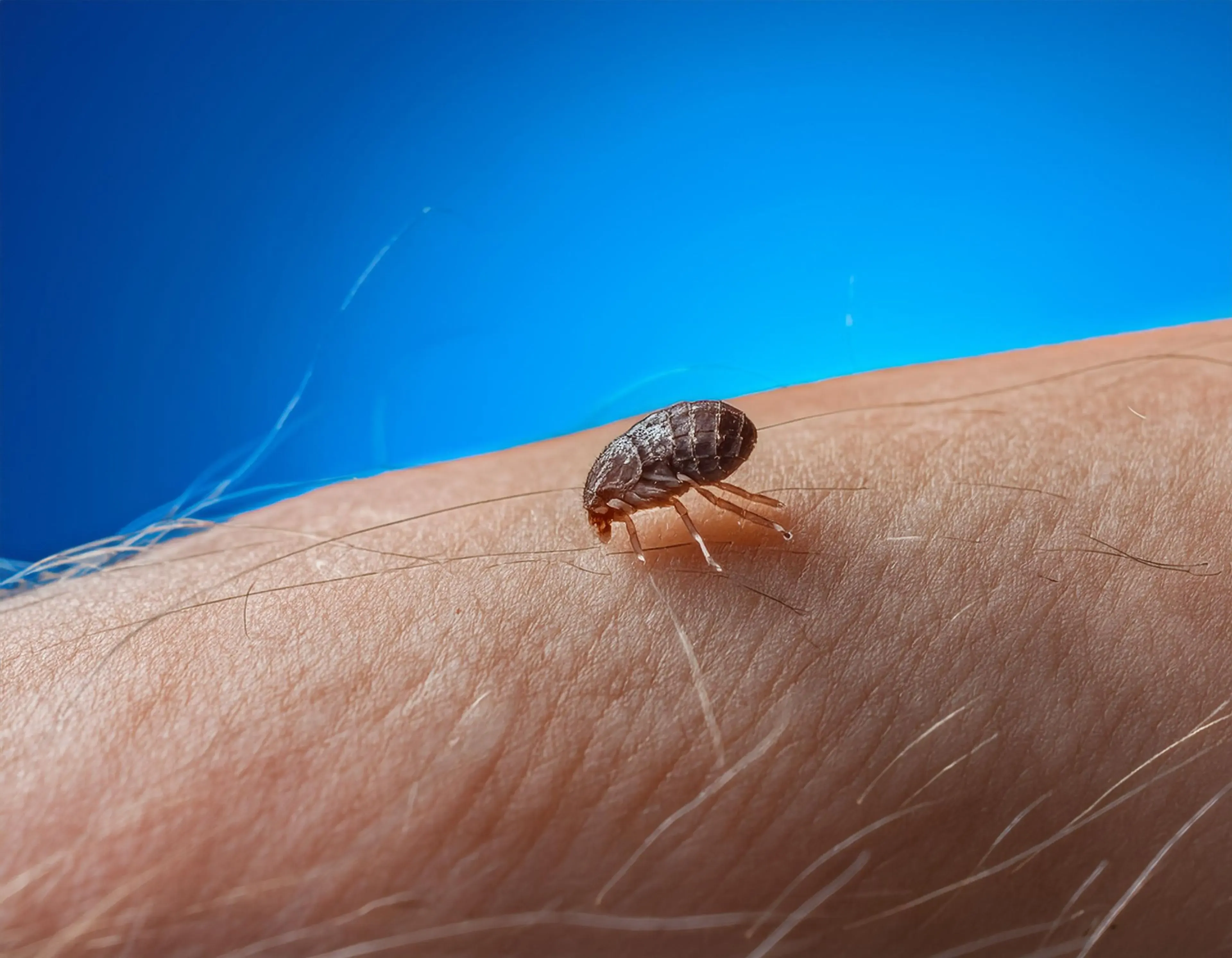
4 min read · Blades Pest Solutions
Fleas are not usually dangerous to healthy adults, but they are far from harmless. Their bites are intensely itchy and can become infected, they trigger allergic skin reactions in many people and pets, and they can pass tapeworm to cats, dogs and occasionally young children. Serious disease in humans is rare in the UK, but the misery and risk to pets make prompt action sensible.
The main health risks
Most flea bites are a nuisance rather than a medical emergency, but the genuine risks are worth taking seriously:
- Itchy, infectable bites. Flea bites cause small, intensely itchy, swollen red spots, usually in clusters around the ankles and lower legs. Persistent scratching can break the skin and lead to a secondary bacterial infection.
- Flea allergy dermatitis. Some people and many pets are allergic to proteins in flea saliva. In these cases even a single bite can trigger intense itching, inflamed skin and, in animals, hair loss.
- Tapeworm transmission. Fleas can carry the tapeworm Dipylidium caninum. If a cat or dog - or occasionally a young child - swallows an infected flea while grooming or playing, it can pick up the parasite. It is treatable, but unpleasant.
- Rarer infections. Fleas have been linked to bacterial infections such as cat-scratch disease (Bartonella) and, in rare cases worldwide, to murine typhus. These are uncommon in UK homes, and we won't pretend otherwise - but they are part of the honest picture.
The NHS and UK Health Security Agency advise keeping bites clean, avoiding scratching, and treating both pets and the home environment to break the cycle. For pets, your vet is the right first port of call for any reaction or suspected tapeworm.
Who is most at risk
Fleas affect everyone, but the impact is greater for some groups:
| Group | Why they're more vulnerable |
|---|---|
| Young children | More likely to play on carpeted floors where larvae and pupae hide, and can react strongly to bites or accidentally swallow a flea. |
| Pets (cats & dogs) | The primary hosts; at risk of flea allergy dermatitis, tapeworm and, in heavy infestations on small or young animals, anaemia. |
| Allergy-prone people | Can develop flea allergy dermatitis, with disproportionate itching and inflammation from even a single bite. |
| Elderly or immunocompromised | Slower healing and a higher chance of bites becoming infected. |
| Pet shops & veterinary clinics | High animal turnover makes infestations easy to spread; a flea problem is a reputational and welfare issue as well as a health one. |
What to do about it
The single most important rule is that fleas live on the pet and in the home - so both have to be treated. Only around 5% of a flea population is on the animal at any time; the rest are eggs, larvae and pupae hiding in carpets, rugs, bedding and floorboards. Treat the pet alone and the home simply reinfests it.
Sensible steps you can take straight away:
- Treat pets with vet-recommended flea control, and ask your vet about worming if you suspect tapeworm.
- Vacuum carpets, rugs, upholstery and skirting thoroughly and often, then dispose of the bag or empty the canister outside.
- Wash pet bedding and any affected soft furnishings on a hot wash.
- Keep bites clean and try not to scratch; see a pharmacist or GP if a bite looks infected.
Fleas breed fast - up to 50 eggs a day - and pupae can lie dormant for weeks, which is why shop-bought sprays so often fail to clear an established problem. Professional treatment targets every stage of the lifecycle across the whole property, with a follow-up visit timed to catch newly hatched fleas. It is also applied safely around children, pets and food-preparation areas by a qualified, insured technician working strictly to approved-product labels under COSHH and the Control of Pesticides Regulations.
It helps to act early rather than waiting for so-called "flea season" to pass. Fleas are most active from late spring through early autumn, but central heating keeps modern homes warm enough for them to breed all year round - and many UK households see their worst infestations in autumn, as summer-bred fleas move indoors for warmth. Treating at the first sign of bites or persistent pet scratching stops a small problem becoming an established one.
If the bites keep coming, your pet won't stop scratching, or a DIY attempt hasn't worked, it's time to call in the experts. Blades Pest Solutions is RSPH-qualified and fully insured, and we work to a clear, agreed treatment plan we're confident in. Call our freephone line on 0800 037 7358 for advice and a free, no-obligation price.
FAQs
- Are fleas dangerous to humans?
- For most people fleas are an irritant rather than a serious danger. The bites are intensely itchy and can become infected if scratched, and some people react badly to flea saliva. Serious disease transmission to humans is rare in the UK, but the bites and the risk to children and pets make prompt treatment well worth it.
- Can fleas make my pet ill?
- Yes. Fleas can cause flea allergy dermatitis, intense scratching and hair loss in cats and dogs, and a single bite can be enough in allergic animals. They can also pass on the tapeworm Dipylidium caninum if your pet swallows an infected flea while grooming. Heavy infestations on young or small animals can even cause anaemia.
- Can children catch tapeworm from fleas?
- It is uncommon, but young children can occasionally pick up the Dipylidium tapeworm if they accidentally swallow an infected flea. It is treatable, but it is another reason to clear an infestation quickly and treat pets at the same time as the home.
- Do I need to treat both my pet and my house?
- Almost always, yes. Only around 5% of a flea population lives on the animal at any time. The rest hides as eggs, larvae and pupae in carpets, bedding and floorboards, so treating the pet alone leaves the home to reinfest it. Combining a vet-recommended pet treatment with professional treatment of the property breaks the cycle.
- How much does professional flea treatment cost?
- It depends on the size of the property and how many rooms need treating, as whole-home coverage and a follow-up visit are usually needed. Call our freephone line on 0800 037 7358 for a free, no-obligation price.