
7 min read · Blades Pest Solutions
That scratching and scampering overhead at first light is rarely your imagination. A grey squirrel that has found its way into your loft is not a passing visitor; it is a determined rodent that gnaws around the clock, and the longer it stays the more damage it does. Acting at the first signs is the difference between a straightforward removal and weeks of disruption, ruined insulation and, at worst, chewed cabling that turns into a fire risk. This guide explains how to recognise a squirrel problem, why it matters, what you can and cannot do yourself, and the lawful, humane way professionals get them out and keep them out.
Signs of a squirrel problem
Squirrels are noisy, busy animals, and a loft is a poor place for them to hide. The tell-tale signs include:
- Loud scratching, scampering and rolling or gnawing sounds in the loft or wall cavities, usually heard at dawn and dusk when squirrels are most active.
- Chewed timber, joists, stored boxes and insulation, often with shredded material pulled together into a nest, known as a drey.
- Stripped or gnawed electrical cabling and damage to roof felt, fascias and soffits where they force an entry.
- Droppings that are larger and more rounded than rat droppings, plus greasy smear marks around entry holes.
- Daytime sightings of a grey squirrel running along guttering, fences or the roofline, or repeatedly disappearing into the eaves, which strongly suggests a resident animal rather than one just passing through.
Timing matters too. Squirrels are active all year and do not hibernate, but call-outs peak in autumn and winter as they seek warm, dry harbourage in lofts ahead of the cold. There are two main breeding periods, broadly January into spring and again in summer, so the noise overhead often intensifies in late winter and early spring when females are nesting and rearing young in the roof. If the sounds seem to be getting louder or coming from more than one spot, it is a sign the problem is established rather than fleeting.
Why squirrels are a risk
The biggest threat from squirrels is to your property rather than your health. Their teeth grow continuously, so they gnaw constantly to keep them in check, and chewed electrical wiring is a recognised cause of house fires. They will also damage water pipes, timber, plasterboard and anything you have stored in the roof. Loft insulation that has been soiled and compacted loses its effectiveness, and urine and droppings leave stubborn odours and stains, so contaminated material usually needs clearing and the area disinfecting.
Squirrels are not a major source of human disease in the UK, but they can carry parasites such as fleas and ticks, and a cornered or trapped squirrel can deliver a painful bite, so they should never be handled. There is also a wider ecological cost: grey squirrels carry the squirrelpox virus, which is harmless to them but devastating to our native red squirrels. For a business, the same gnawing damage can mean unexpected downtime, harm to stored stock and damage to the fabric of an office or warehouse, which is why prompt, professional control matters just as much in commercial premises as it does at home.
Can you get rid of squirrels yourself?
There are sensible things a homeowner can and should do, but it pays to be honest about the limits. Regularly inspecting your loft, roof and exterior for entry points such as holes and chewed wood is worthwhile, and so is keeping tree branches trimmed back from the roof and using squirrel-proof bird feeders to remove the attraction in the first place. What you should not do is attempt to corner, catch or handle a squirrel. They can become aggressive when they feel threatened, and an animal trapped by an inexperienced hand is both a bite risk and a welfare problem.
Shop-bought repellents, ultrasonic gadgets and one-trap-from-the-hardware-store approaches tend to disappoint. A squirrel that has chosen your warm, dry loft to nest in is not easily deterred, and partial measures often just move the problem around or, worse, leave you with a legal headache if a live grey squirrel is caught and released. Crucially, DIY rarely tackles the two things that actually solve the problem: lawful removal of every animal present, and proofing the building so the next squirrel cannot simply move back in. There is also the awkward fact that handling grey squirrels is governed by wildlife law, covered below, which puts well-meaning catch-and-release squarely on the wrong side of the rules.
The fastest, safest way to get rid of squirrels
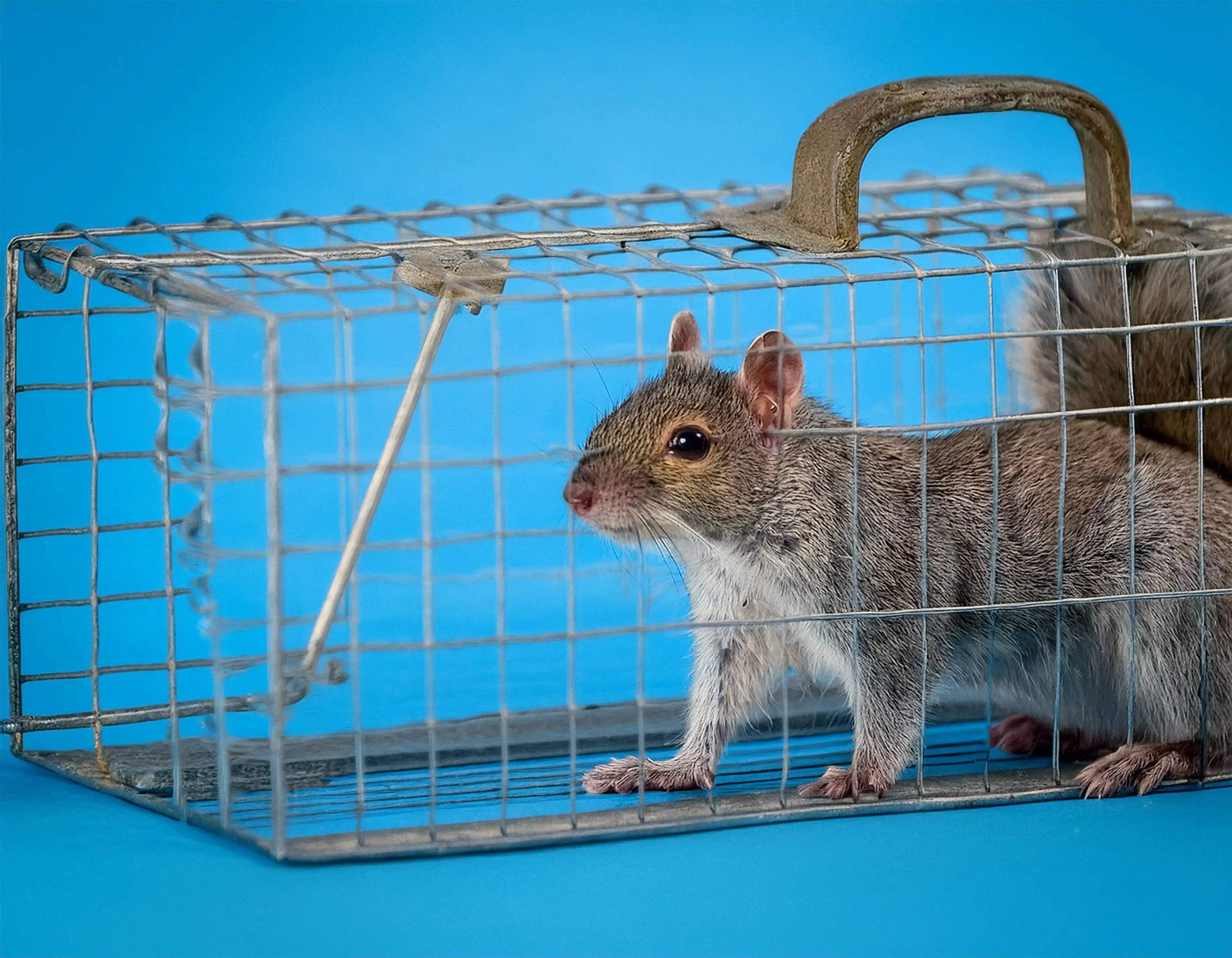
Professional control is faster, safer and far more reliable, and it is built around three things working together. First, exclusion and proofing: we identify and seal every entry point around the roofline, eaves and fascias so squirrels cannot get back in. Second, trapping and removal: any squirrels already inside are caught and dealt with lawfully and humanely, with traps monitored over several days rather than left and forgotten. Third, damage repair and aftercare: we put right the structural damage squirrels cause and advise on keeping the property squirrel-free, so the fix lasts. Because a nesting female with dependent young makes removal more complicated, acting early genuinely makes the job cleaner and quicker. Most squirrel jobs involve more than one visit, since trapping and monitoring take place over several days rather than in a single drop-in, and that staged approach is what makes the outcome dependable. You can see the full scope of our squirrel control service and how we tailor it to homes, offices and warehouses alike.
Preventing squirrels
Once they are out, keeping them out comes down to denying access and removing temptation:
- Regularly inspect the roofline and seal any potential entry points around eaves, fascias, soffits and gaps in roof felt.
- Trim tree branches well back from the roof so squirrels cannot use them as a bridge.
- Use squirrel-proof bird feeders and avoid leaving accessible food sources in the garden.
- Keep bins secured and the area around the building tidy to make it less inviting.
Proofing is usually the most valuable part of any squirrel job, because it is what stops the cycle of removal and re-entry. The amount of work varies from building to building, which is one reason we always assess a property in person.
The law on squirrels
This is where squirrel control differs from most other pests, and getting it wrong can break the law. The grey squirrel is a non-native invasive species listed under Schedule 9 of the Wildlife and Countryside Act 1981, and it is an offence to release a trapped grey squirrel back into the wild or to allow one to escape. Under the Invasive Alien Species (Enforcement and Permitting) Order 2019, Natural England no longer issues licences to release them, so any squirrel that is live-trapped must be humanely dispatched in accordance with the Animal Welfare Act 2006, not relocated. That is precisely why amateur trap-and-release is not an option, and why proofing and professional, legally compliant control are so important. Our RSPH-qualified technicians carry out all work humanely and strictly within the law. It is worth noting that the protected native red squirrel is not found in our Suffolk and north Essex service area, so the animals we deal with here are grey squirrels.
Get expert help
If you have heard the signs, do not wait for the damage to add up. Blades Pest Solutions offers same-day and 24/7 squirrel control across Ipswich, Suffolk and north Essex, with commercial cover available UK-wide. We are RSPH-qualified, fully insured, and every job is carried out lawfully and humanely. We will assess your property, agree a clear plan with you, and we are confident in our work from removal through to proofing and repair. Call 0800 037 7358 for a free, no-obligation price.
FAQs
- How do I get rid of squirrels in my loft?
- The reliable route is professional control: a technician locates every entry point, traps and removes the resident squirrels lawfully and humanely, then proofs the roofline so they cannot return. Blades can attend the same day across Suffolk and north Essex. Call 0800 037 7358 for a free, no-obligation price.
- Is it illegal to release a grey squirrel?
- Yes. The grey squirrel is a non-native invasive species, and under the Wildlife and Countryside Act 1981 and the Invasive Alien Species Order 2019 it is an offence to release a trapped grey squirrel or let it escape. Any live-trapped grey squirrel must be humanely dispatched within the law, which is exactly how our RSPH-qualified technicians work.
- Are squirrels in the loft a fire risk?
- They can be. Squirrels gnaw constantly, and chewed electrical cabling is a recognised cause of house fires. They also damage water pipes, timber and insulation, so it is worth acting at the first signs rather than waiting.
- Why do I keep hearing noises in my loft at dawn and dusk?
- Squirrels are most active in the early morning and late afternoon, so loud scratching, scampering and gnawing at those times is a classic sign of a resident grey squirrel. Noise often intensifies in late winter and spring when females are nesting and rearing young in the roof.
- How much does squirrel control cost?
- It depends on how established the problem is, the property and how accessible the loft is, and most jobs need more than one visit plus proofing work. We do not quote blind. Call 0800 037 7358 for a free, no-obligation price.