
5 min read · Blades Pest Solutions
Bed bugs and fleas are easy to confuse: both are tiny, both bite at night, and both hide in carpets, beds and soft furnishings. But telling them apart is not a detail you can skip - it decides the whole approach. Flea control only works if a pet is treated by a vet alongside the home, while bed bugs need targeted work on beds, frames and skirting and never involve an animal. Treat for the wrong insect and you waste time, money and let a fast-breeding infestation take hold.
The quick answer
Check two things: where the bites are, and whether you have a pet. Bites around the ankles and lower legs, plus a cat or dog that keeps scratching, almost always mean fleas. Bites in lines or clusters on the arms, neck and shoulders that you notice on waking, with dark spots along the mattress seams, almost always mean bed bugs. Fleas jump and live on and around pets; bed bugs crawl and live in your bed. If you are unsure, a five-minute inspection by us settles it - call 0800 037 7358.
Side-by-side comparison
| Feature | Bed Bugs | Fleas |
|---|---|---|
| Size & appearance | Flat, oval, reddish-brown, about 4-5 mm - roughly the size of an apple seed. | Smaller, brownish-red, about 1-3 mm, with a narrow body and long hind legs. |
| Movement | Crawl only - no jumping, no flying. | Jump long distances; you may see them leaping off carpet or a pet's coat. |
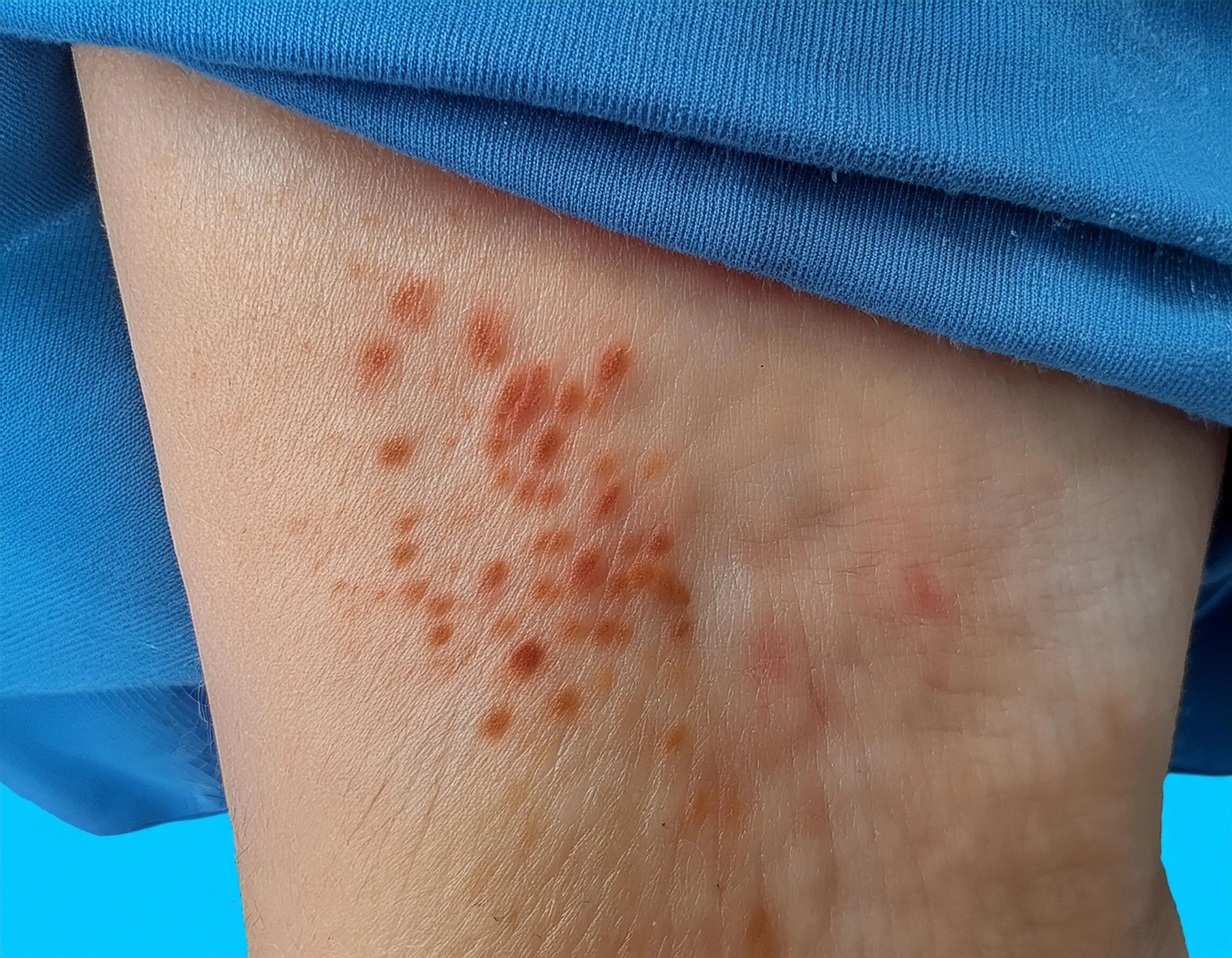
| Bite location | Arms, neck, shoulders and other skin exposed during sleep, often in a line or cluster. | Ankles and lower legs, in small clusters, because fleas can only jump so high. |
| Signs & droppings | Dark spots and red smear marks on bedding, pale shed skins, tiny eggs, sometimes a sweet musty smell. | Gritty black "flea dirt" that turns rusty-red on damp tissue, found on pet bedding and skirting. |
| Where found | Mattress seams, headboards, bed-frame joints, skirting and behind wallpaper. | Carpets, rugs, upholstery, floorboard cracks and on the pet itself. |
| Pets involved? | No - bed bugs feed on people, not pets. | Yes - usually a cat or dog is the source; only about 5% of fleas are on the animal. |
| Main risk | Intense itching, sleep loss and distress; not known to spread disease. | Itchy bites, possible flea allergy dermatitis in pets, and tapeworm risk to animals. |
How to tell which you have
Start with the bites. Waking up with small, itchy welts in a line or cluster on your arms, neck and shoulders is the classic bed-bug pattern. Repeated, intensely itchy spots in small clusters around the ankles and lower legs point to fleas instead.
Then check the hiding places. For bed bugs, look closely along mattress seams, the headboard, bed-frame joints and skirting boards for small dark brown or black spots (digested blood), rust-coloured smear marks where a bug has been crushed, pale shed skins, and clusters of tiny eggs. In heavier cases you may notice flat, apple-pip-sized bugs and a faint sweet, musty almond-like odour.
For fleas, watch for tiny reddish-brown insects leaping in the carpet or off a pet's coat when you part the fur. Look for "flea dirt" - black, gritty specks on pet bedding, sofas or skirting; smear it onto damp white tissue and if it dissolves to a rusty-red halo, that confirms fleas. The biggest single clue is a pet scratching, biting or licking itself excessively. Remember that only around 5% of a flea population is on the animal - the rest is hidden as eggs, larvae and pupae in your carpets and floorboards.
One more useful test is timing and location. Bed bugs are nocturnal feeders that emerge from cracks and crevices at night, so their presence is usually most obvious when you wake with fresh bites in the morning, and the trail of evidence leads straight back to the bed. Fleas, by contrast, are spread across the whole room - eggs, larvae and pupae sit deep in carpets, rugs and floorboard cracks, and the activity follows wherever the pet spends its time rather than centring on a bed.
If it still is not clear, do not guess. Both insects breed fast - bed bugs lay up to five eggs a day and fleas up to fifty - so a wrong call costs you ground. Bed bugs are also notorious hitchhikers that travel in luggage and second-hand furniture, while fleas often arrive on a new or visiting animal, so think back over recent travel, purchases or pets when you weigh up which is more likely.
What to do next
Once you know which insect you are dealing with, the path is straightforward. For a confirmed bed-bug problem, read our full guide to getting rid of bed bugs and see the detail on our bed bugs page. Bed bugs have grown resistant to many shop-bought sprays, so professional steam, heat or targeted insecticide is usually the reliable route.
For fleas, see our guide to getting rid of fleas and our fleas page. The key is treating the pet (with a vet-recommended product) and the home at the same time - clear one and not the other and the infestation simply returns.
Still not certain, or want it dealt with properly the first time? Our RSPH-qualified, fully insured technicians will identify the insect, agree a clear treatment plan and act fast across Ipswich, Suffolk and north Essex. Call our freephone line on 0800 037 7358 for advice and a free, no-obligation price.
FAQs
- Do I have bed bugs or fleas?
- Look at where the bites are and whether a pet is involved. Bites around the ankles and lower legs, with an itchy, scratching pet in the home, usually point to fleas. Bites in lines or clusters on the arms, neck and shoulders after sleeping, with dark spots along the mattress seams, usually point to bed bugs. Fleas jump; bed bugs crawl.
- Can you have bed bugs and fleas at the same time?
- It is uncommon but possible, which is exactly why a proper identification matters before treatment. Treating for the wrong insect wastes time and lets the real infestation grow. A quick inspection settles it. Call us free on 0800 037 7358 and we will confirm which one you are dealing with.
- Do bed bugs and fleas spread disease?
- The NHS confirms bed bugs are not known to spread disease, so the main issues are itching, distress and lost sleep. Fleas are usually more nuisance than danger but can transmit tapeworm to pets and, rarely, cause other infections. With both, scratching can lead to a secondary skin infection.
- Why does the difference change the treatment?
- Fleas almost always involve a pet, so the animal must be treated by a vet at the same time as the home, or the cycle simply restarts. Bed bugs do not involve pets and hide in beds, frames and skirting, often needing targeted insecticide, steam or heat. Treat the wrong target and the problem persists.
- How much does treatment cost?
- It depends on the pest, the size of the property and the spread of the infestation, so we never quote blind. Call 0800 037 7358 for a free, no-obligation price once we know which insect you are dealing with.