
4 min read · Blades Pest Solutions
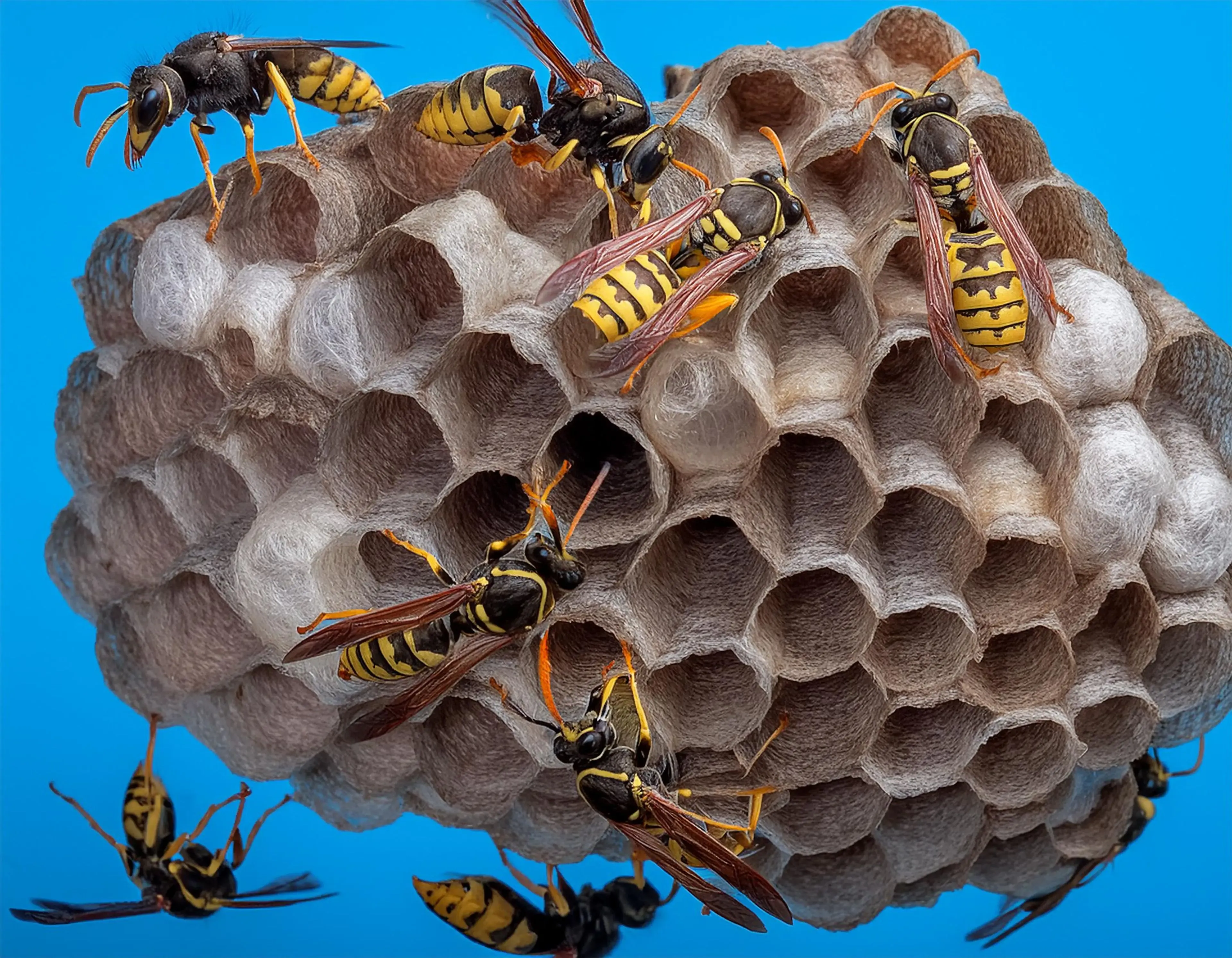
Yes, a wasp nest can be genuinely dangerous. Wasps sting repeatedly and defend their nest aggressively, so a disturbed nest can prompt many wasps to attack at once. For most people that means painful stings, but for anyone who is allergic it can be life-threatening, and the greatest danger of all is disturbing a hidden nest or attempting DIY removal.
The main health risks
Unlike a bee, a wasp can sting again and again, and a threatened nest sends many wasps out to attack together. For most people a sting causes short-lived pain and swelling. The serious risk is an allergic reaction: in people who are sensitised, a sting can trigger anaphylaxis, a severe and potentially life-threatening response. Wasp and bee sting allergy is responsible for a small number of UK deaths every year.
The other major risk is the multiple-sting scenario. Accidentally mowing over a ground nest, knocking a nest in an eave, or disturbing one while clearing a loft or shed can release dozens of defensive wasps in seconds. The NHS and UK Health Security Agency advise treating any signs of a serious reaction, such as difficulty breathing, swelling of the face or throat, or dizziness, as a medical emergency requiring 999. In food businesses, scavenging wasps are also a genuine contamination and customer-safety concern.
The level of danger also rises sharply through the season. A nest starts small in spring with a single queen, grows rapidly through June and July, and peaks in August and September, when a single nest can hold thousands of workers. By late summer wasps become noticeably more aggressive and are drawn to fermenting fruit and sugary food, which is why the great majority of sting incidents and call-outs happen between July and October. A nest that seemed harmless in early summer can become a serious hazard within weeks.
Who is most at risk
- People with a known sting allergy - even a single sting can be dangerous, so a nest should be removed promptly and never tackled personally.
- Young children - at schools, nurseries and homes with play areas, children may not recognise or avoid a nest near doors, sandpits or climbing frames.
- Older and less mobile people - slower to move away from a defending swarm.
- Anyone who has been stung many times at once - a large number of stings can cause a reaction even without a prior allergy.
- Food and hospitality businesses - pubs, cafes and restaurants with outdoor dining draw scavenging wasps in late summer, putting staff and customers at risk and threatening hygiene standards.
What to do about it
If you have found, or suspect, a nest, the safest immediate steps are simple. Keep your distance and do not block the wasps' flight path. Keep children and pets well away. Close nearby windows and doors, and cover food and sweet drinks outdoors, especially in late summer when wasps scavenge most. Crucially, do not attempt DIY removal: disturbing the nest provokes the whole colony, and shop-bought aerosols rarely reach a nest hidden in a cavity, roof void or wall, leaving you exposed and the problem unsolved.
You should call a professional without delay if the nest is near a door, window, path, play area or dining space; if anyone in the household or premises has a sting allergy; if the nest is large, high up, or hidden inside the building fabric; or if it is a commercial or food site with a duty of care. These are the situations where removal becomes urgent rather than optional.
One important check: if an inspection shows the nest is actually honey bees rather than wasps, treatment must not go ahead. Bees are valuable pollinators that should be preserved and, wherever possible, relocated by a beekeeper. We will always identify the insect correctly before doing anything.
Blades Pest Solutions is RSPH-qualified and fully insured, with same-day and 24/7 call-outs across Ipswich, Suffolk and north Essex. We will inspect, confirm the species, and treat the nest safely with the right protection and approved products, then advise on proofing gaps so wasps cannot re-enter. For a free, no-obligation price, call 0800 037 7358 and speak to us today.
FAQs
- Is a wasp nest dangerous to leave alone?
- An undisturbed nest in a remote spot may pose little immediate risk, but any nest near doors, windows, paths, play areas or food is a real hazard. Wasps sting repeatedly and defend the nest aggressively, so a nest in a high-traffic location should be treated promptly.
- How many wasps are in a nest?
- A nest starts small in spring with a single queen, then grows rapidly through summer. By August and September a single nest can hold thousands of workers, which is exactly when stings and aggression peak.
- Can a wasp sting be deadly?
- For most people a sting causes short-lived pain and swelling. In people who are allergic it can trigger anaphylaxis, a severe and potentially life-threatening reaction. Sting allergy causes a small number of UK deaths each year, so a known allergy makes prompt, professional removal a priority.
- Should I remove a wasp nest myself?
- No. DIY removal is where most serious sting incidents happen. Disturbing a nest provokes the whole colony at once, and aerosol products rarely reach a nest hidden in a cavity, roof or wall. An RSPH-qualified technician treats it safely with the right protection and approved products.
- How much does wasp nest removal cost?
- Cost depends on the nest's location and accessibility. We do not quote a fixed figure online. Call 0800 037 7358 for a free, no-obligation price, with same-day and 24/7 call-outs across Suffolk and north Essex.