
5 min read · Blades Pest Solutions
Hearing something moving above your ceiling is unsettling - but before you can deal with it, you need to know what it is. Identifying the animal correctly is not a technicality: it changes everything that happens next. Squirrels, rats, mice and birds each need a different, legally compliant approach, and grey squirrels in particular carry strict obligations under UK law. Guess wrong and you waste time while gnawing damage and numbers build. Get it right and the problem is solved quickly and for good.
The quick answer
Listen to when the noise happens. Loud, heavy scratching, scampering and rolling sounds during the day, especially at dawn and dusk, almost always mean squirrels - they are active in daylight and do not hibernate. Scratching, gnawing and scurrying after dark point to rats or mice, which are nocturnal. Fluttering, shuffling and cooing around the eaves and roofline usually mean birds. Whatever it is, gnawing rodents and squirrels are a genuine fire risk, so it is worth acting quickly. If you are unsure, call 0800 037 7358 and we will identify it for you.
Side-by-side comparison
| Feature | Squirrels | Rats | Mice | Birds |
|---|---|---|---|---|
| Size | Small-to-medium rodent with a bushy tail; grey to reddish-brown | Robust body, 20-40cm including a long scaly tail | Small, body 7-10cm plus a thin tail; grey-brown | Varies; sound, not size, is the clue |
| Time of noise | Daytime, peaking at dawn and dusk | Mostly after dark | Mostly after dark | Around dawn, near the roofline |
| Sound | Loud scratching, scampering, rolling and gnawing | Bold scurrying, gnawing and scratching in walls, ceilings and lofts | Faint, quick scratching and scurrying | Scratching, shuffling, fluttering and cooing |
| Droppings / signs | Larger, rounded droppings; shredded insulation; twig-and-leaf dreys | Spindle-shaped pellets 12-18mm; greasy smear marks | Tiny rice-grain pellets 3-6mm; greasy smears on runs | Nesting material near eaves; feathers and white droppings |
| Behaviour | Seen running along guttering, fences and rooflines in daylight | Nocturnal, social, often in groups; strong swimmers | Nocturnal, agile climbers reaching high and low entry points | Nesting in eaves, soffits and roof voids |
| Where found | Lofts, roof voids and wall cavities; enters via eaves, fascias and soffits | Lofts, cavity walls, kitchens, drains and outbuildings | Lofts, wall cavities, behind kitchen units, cupboards | Eaves, soffits and the roofline rather than deep in the loft |
| Main risk | Property damage and fire risk from gnawed wiring; legal obligations on grey squirrels | Disease, food contamination and fire risk from chewed cables | Food contamination and fire risk from gnawed wiring | Nest debris and droppings; some species and nests are legally protected |
How to tell which you have
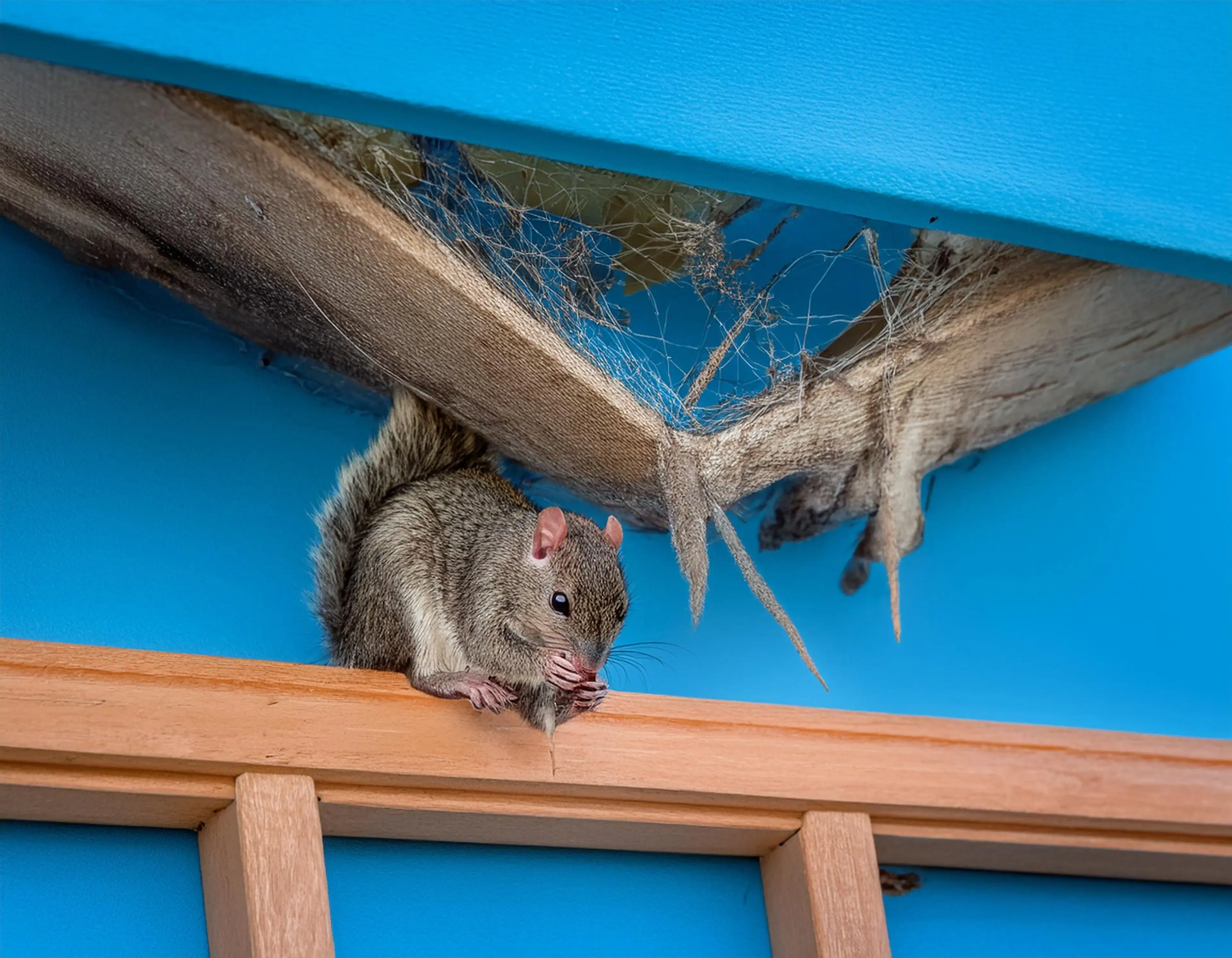
Squirrels. The classic sign is loud scratching, scampering and rolling or gnawing in the loft or wall cavities, usually heard at dawn and dusk. Look for chewed timber, joists and stored boxes, stripped or gnawed cabling, and damage to roof felt, fascias and soffits where they get in. You may find shredded insulation or a twig-and-leaf drey, larger rounded droppings, and greasy smears around entry holes. A grey squirrel running along the guttering or repeatedly entering the eaves in daylight is a strong giveaway.
Rats. The clearest sign is droppings - dark, spindle-shaped pellets around 12-18mm, often clustered along skirting, under sinks or in lofts. You will hear scratching, gnawing and scurrying after dark, and may spot gnaw marks on cables and pipes, greasy brown smear marks on beams and pipe runs, shredded nesting material, and a stale, ammonia-like odour. Burrow holes near drains, decking or outbuildings point to an established infestation.
Mice. Most people notice the droppings first: tiny dark rice-grain pellets about 3-6mm, scattered along skirting, in cupboards and in loft spaces. The noise is fainter and quicker than a rat's - light scratching and scurrying after dark. Look for gnaw marks on packaging and trim, greasy dark smears along regular runs, shredded nesting material, and a musky urine smell in enclosed areas.
Birds. Bird noise tends to come from the eaves, soffits or roofline rather than deep in the loft, with scratching, shuffling, fluttering and cooing, often concentrated around dawn. You may see nesting material, feathers or droppings near entry points. Bear in mind that some wild birds and their active nests are legally protected, so this is best handled carefully and lawfully.
What to do next
Once you know what you are dealing with, act on it - overhead gnawing is not just a nuisance, it is a recognised fire risk where it reaches electrical cabling, and rodent numbers build fast.
- Squirrels: read more on our squirrel control page and our guide on how to get rid of squirrels. Grey squirrels carry strict legal duties, so professional, compliant handling matters.
- Rats: see our rat control page and the guide on how to get rid of rats.
- Mice: see our mouse control page and the guide on how to get rid of mice.
- Birds: because protections apply, the safest first step is a quick call so we can advise on the lawful, humane approach.
If you cannot place the noise - or you simply want it dealt with properly the first time - call Blades Pest Solutions on 0800 037 7358. Our RSPH-qualified, fully insured technicians will identify the species, treat it safely and legally, and proof the entry points so it does not return. We cover Ipswich, Suffolk and north Essex with same-day response, and offer a free, no-obligation assessment.
FAQs
- I hear scratching in the loft during the day - what is it?
- Daytime scratching, heavy scurrying and rolling or gnawing sounds, usually at dawn and dusk, point to squirrels, which are active in daylight and do not hibernate. Rats and mice are nocturnal, so noise after dark is more likely to be rodents. Birds tend to scratch, shuffle and coo around the eaves and roofline. If you are unsure, call 0800 037 7358 and we will identify it for you.
- Are loft noises a fire risk?
- They can be. Squirrels, rats and mice all gnaw constantly to wear down their teeth, and chewed electrical cabling is a recognised cause of avoidable house fires. They will also damage pipework, timber and insulation. That is why it is worth identifying and dealing with overhead noise promptly rather than ignoring it.
- How can I tell rats from mice by the noise?
- Both are nocturnal, so you will mostly hear them after dark. Rats are larger and heavier, so the scurrying and gnawing tends to sound bigger and bolder; mice are lighter and faster, producing faint, quick scratching. The droppings are the clearest giveaway - rat droppings are around 12-18mm and spindle-shaped, while mouse droppings are tiny rice grains of about 3-6mm.
- Could the noise just be birds?
- Yes. Birds nesting in the eaves, soffits or roof void create scratching, shuffling, fluttering and cooing sounds, usually around dawn and concentrated near the roofline rather than deep in the loft. Some wild birds and their nests are legally protected, so bird issues need careful, lawful handling - we can advise on the right approach.
- Do I really need a professional for loft noises?
- Identifying the animal correctly changes the treatment, and grey squirrels in particular carry strict legal obligations. A wrong guess wastes time while gnawing damage and numbers build. Our RSPH-qualified, fully insured technicians identify the species, treat it safely and legally, and proof the entry points so it cannot return. Call 0800 037 7358 for a free, no-obligation assessment.