
5 min read · Blades Pest Solutions
Before you reach for a can of spray, stop and look closely. Telling a wasp from a bee is not just a bit of nature trivia — it decides the right and responsible course of action. Wasps that pose a genuine risk to people can be treated. Honey bees are vital pollinators and there is a strong duty of care to preserve them: wherever it is practical, a swarm or colony should be collected and relocated alive by a beekeeper, never destroyed. Get the identification wrong and you risk either leaving a hazard in place or killing a beneficial insect that could and should have been saved.
The quick answer
If the insect is slender with a narrow waist, smooth-looking and boldly striped bright yellow and black, it is almost certainly a wasp. If it is rounder, distinctly hairy and a softer golden-brown to black, it is a bee. Bees are usually calm and busy around flowers; wasps are bolder, drawn to sweet food and drink, and quick to defend a nest. When in doubt, do not disturb it — keep your distance and call us on 0800 037 7358 for honest advice before anything is treated.
Side-by-side comparison
| Feature | Wasp | Bee |
|---|---|---|
| Size | Slender, roughly 1–2.5 cm long with a pinched, narrow waist. | Robust and rounder, usually about 1–2 cm long. |
| Appearance | Smooth, shiny body in bright yellow and black with sharp banding. | Visibly hairy body, golden-yellow to black; bumblebees are larger and fuzzier. |
| Nest type | Grey, papery layered structure like crumpled paper or honeycomb, made from chewed wood fibres. | Honey bees build waxy combs; bumblebees nest in small loose groups; solitary bees use holes in soft mortar or soil. |
| Behaviour | Assertive defenders — can sting repeatedly and attack en masse if the nest is threatened. | Generally docile, non-aggressive unless directly provoked; swarms are usually calm. |
| Where found | Eaves, wall cavities, lofts, sheds, fence posts; scavenging around bins, fallen fruit and outdoor dining. | Chimneys, wall cavities, tree hollows, soffits, compost heaps, bird boxes; busy around flowers. |
| Risk & action | Repeat stings, anaphylaxis risk, food contamination — treated where they endanger people. | Beneficial pollinators — relocated alive or left undisturbed wherever possible; honey bees never exterminated. |
How to tell which you have
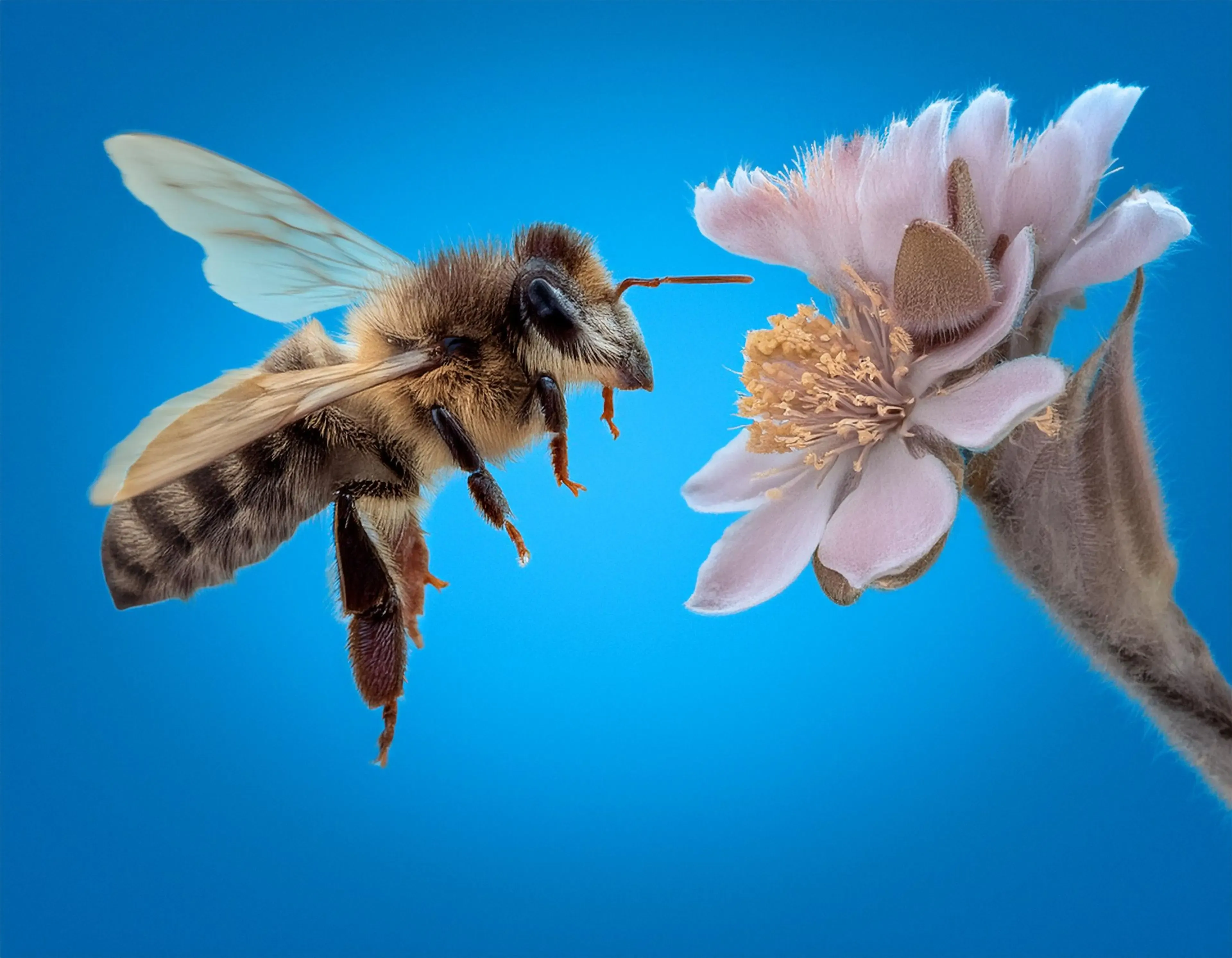
The clearest tells are body shape, colour and behaviour. A wasp is slender with a narrow waist, smooth and shiny, and boldly banded; it has a habit of homing in on sugary drinks, jam, fallen fruit and bins, becoming noticeably bolder and more aggressive in late summer. A bee is altogether rounder and obviously hairy, moves more deliberately, and spends its time working flowers for pollen and nectar rather than your picnic.
A wasp also has a habit of swarming around food and sweet drinks, and its sting can be delivered again and again, so a disturbed nest can prompt many wasps to attack at once. A bee, by contrast, can usually be watched at close range as it works without any sign of alarm, and is far slower to react. These behavioural differences are often easier to read than the markings themselves, especially from a few steps back.
The nest is often the deciding clue. Wasps build a grey, papery, layered nest that looks like crumpled paper or honeycomb, frequently tucked under eaves or in a wall, loft or shed; on a warm day you may hear a faint rustling from inside. Honey bees instead build waxy comb and, in a wall or chimney, produce a steady humming on hot days — sometimes with wax and honey softening and staining through plaster. In spring you may see scout bees circling a spot for a few days before a large, noisy swarm arrives mid-morning. Solitary masonry bees leave small, neat holes in soft mortar with little dust piles below, and bumblebees nest in smaller, looser groups in compost heaps, lofts or under decking. With either insect, a steady stream flying to and from one fixed point — a gap under the eaves, an air brick, a soffit or a roof tile — points to an active nest within the building.
What to do next
Once you know what you are dealing with, the right action follows naturally. If it is wasps, do not disturb the nest, keep food and drink covered, and arrange a professional inspection — see our wasp control page and our guide on how to get rid of wasps for what treatment involves.
If it is bees, please do not spray them. Honey bees are valuable pollinators, and our approach is to relocate them alive with a local beekeeper wherever it can be done safely, or to leave bumblebees and solitary bees undisturbed where there is no real risk. Read more on our bee advice page and our guide on how to handle bees.
If you genuinely cannot tell, that is exactly when to ask. An RSPH-qualified Blades technician will inspect, confirm the species and recommend the responsible course — treatment only where it is warranted, relocation for bees wherever possible. Call 0800 037 7358 for a free, no-obligation chat across Ipswich, Suffolk and north Essex. Getting the identification right protects you, your family and our pollinators alike.
FAQs
- What is the easiest way to tell a wasp from a bee?
- Look at the body. Wasps are slender with a narrow waist, smooth and shiny, and brightly striped yellow and black. Bees are rounder, visibly hairy and a softer golden-brown. Wasps chase sweet food and drink and turn aggressive near a nest; bees are calm and busy around flowers.
- Do you kill bees?
- No. Honey bees are vital pollinators with a strong duty of care to preserve them. Wherever it is practical we relocate a swarm or colony alive with a local beekeeper, and we leave bumblebees and solitary bees undisturbed where there is no real risk. We never exterminate honey bees.
- I found a papery, honeycomb-shaped nest. Is it wasps or bees?
- A grey, papery, layered nest that looks like crumpled paper is a wasp nest, built from chewed wood fibres. Honey bees build waxy comb instead and often hum behind plaster, sometimes staining ceilings with wax and honey on hot days. If you are unsure, do not disturb it and call us to confirm.
- Why does correct identification matter so much?
- Because it changes the right action entirely. Wasps that endanger people can be treated, but honey bees should be relocated or left alone. Getting the identification right means hazards are dealt with properly and beneficial pollinators are protected rather than needlessly destroyed.
- How much does it cost to deal with a wasp nest or bee swarm?
- It depends on the species, the location and how accessible the nest is, so we never quote blind. Call 0800 037 7358 for a free, no-obligation price after we have confirmed what you have on site.