
Pest control & removal
Beetle and Carpet BeetleControl & Removal
Fast, RSPH-qualified, fully insured beetle and carpet beetle treatment with same-day appointments and 24/7 emergency call-outs across the UK.


Identification
How to identify beetles and carpet beetles
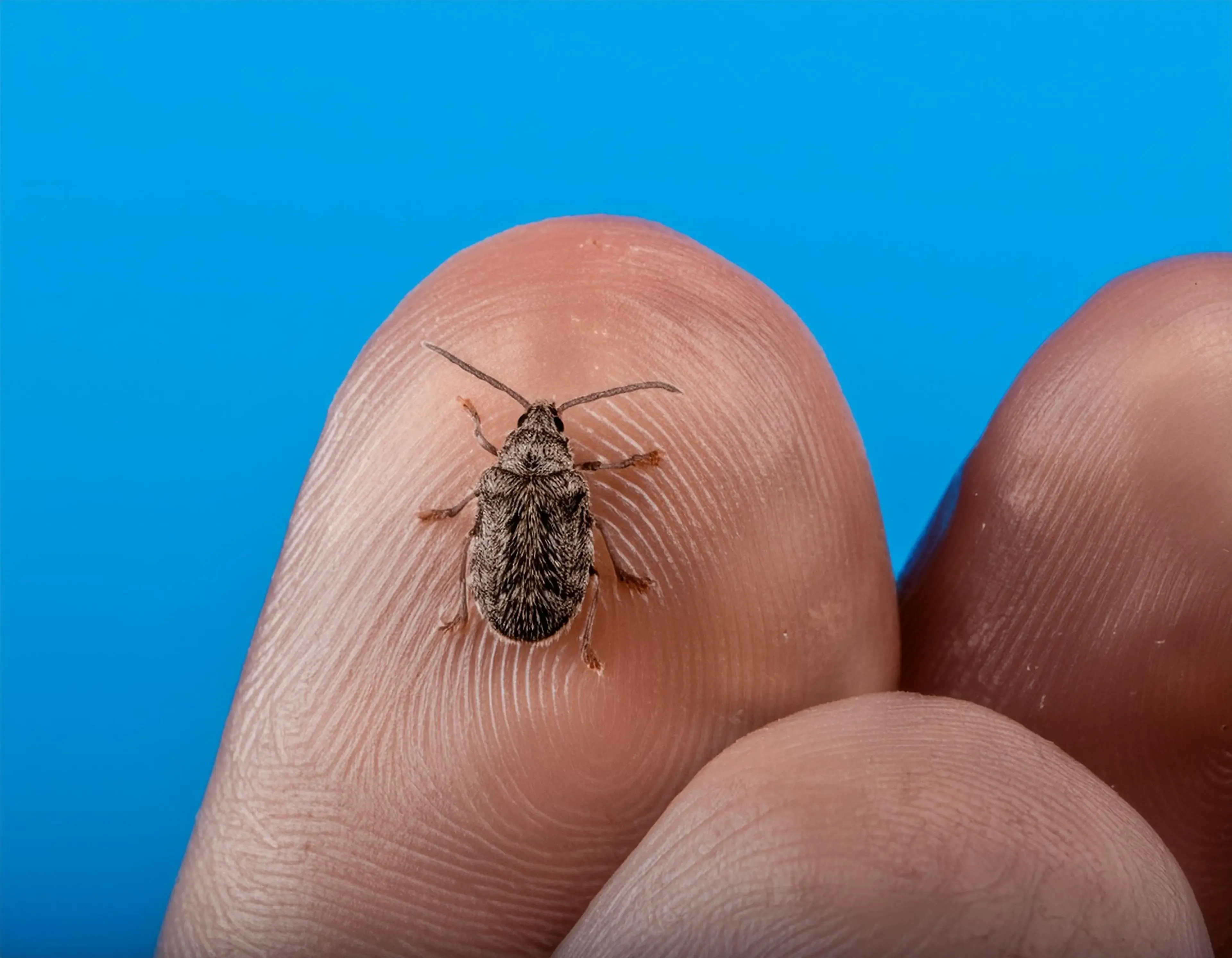
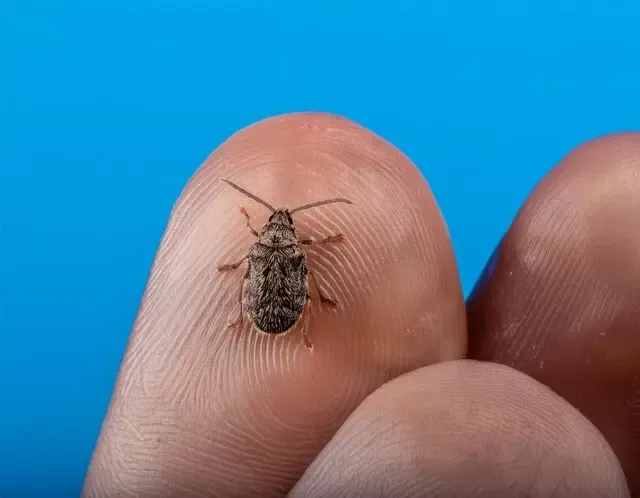
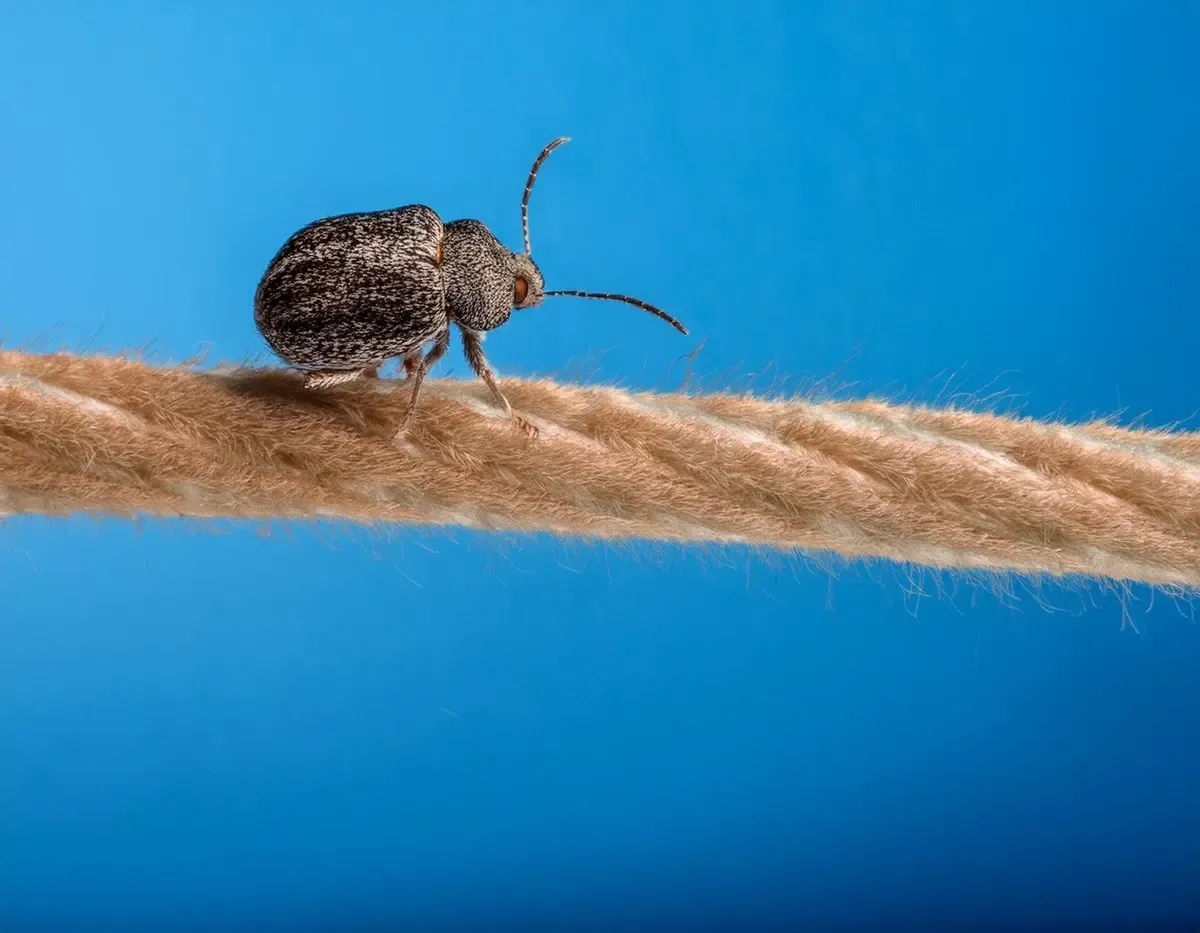
Beetles: Beetles are a diverse group of insects with thousands of species found in the UK. They are typically characterised by their hard, shell-like wing covers, called elytra. Common household beetles include the varied carpet beetle, larder beetle, and furniture beetle. Beetles vary in size, colour, and shape, but they generally have a distinctive body structure with three segments: head, thorax, and abdomen. Carpet Beetles: Carpet beetles are small, oval-shaped insects, typically around 2-4 mm in length. They are often mottled in colour with a mix of black, white, and tan scales. The larvae, known as "woolly bears," are more destructive than the adult beetles and are characterised by their hairy bodies. They feed on natural fibres, causing damage to carpets, clothing, and upholstery.
Warning signs
Signs of a beetle and carpet beetle infestation
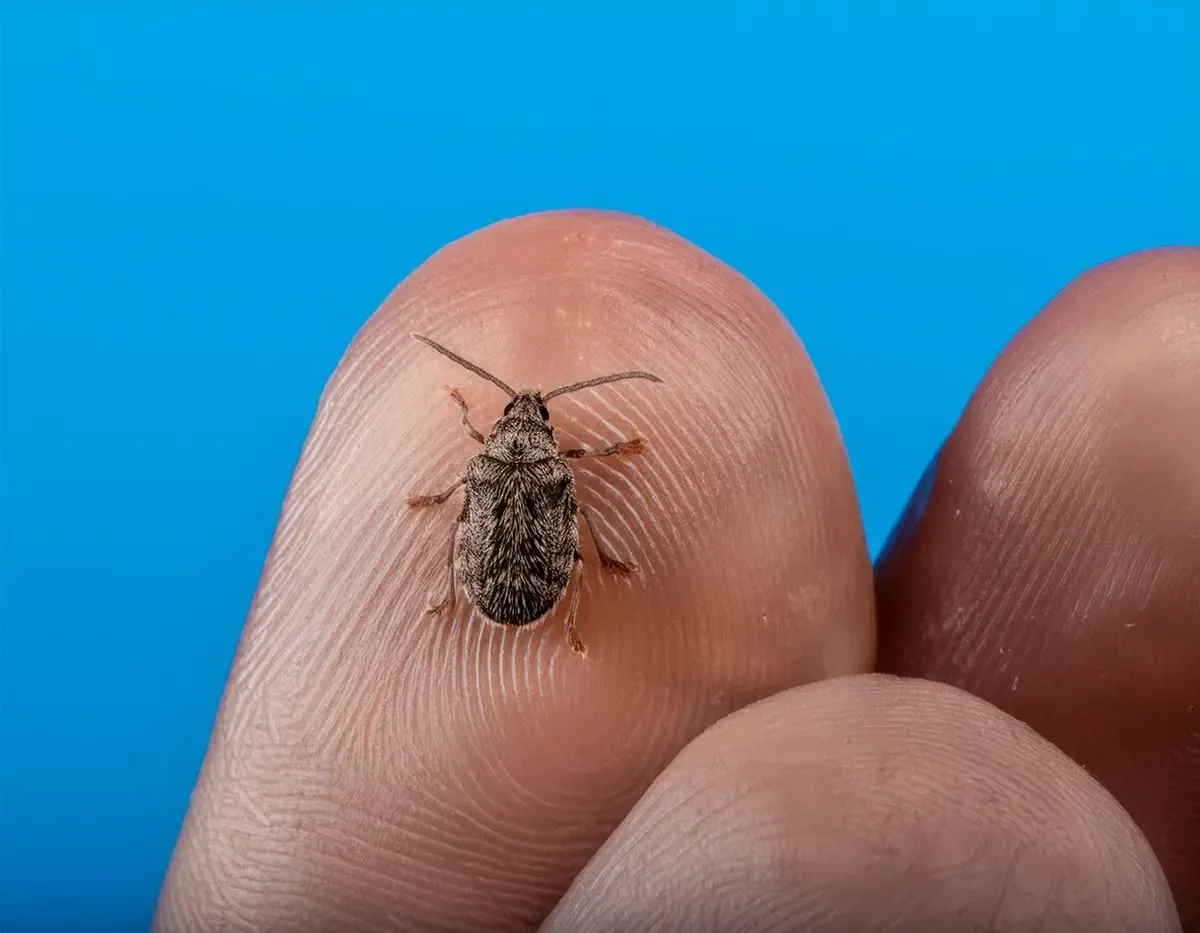
Key signs to look for: (1) Damage to natural-fibre items — irregular holes, bare or threadbare patches in wool carpets (especially under furniture, along skirting boards, in dark undisturbed corners), holes in woollen jumpers, silk, fur, felt, and damage to upholstery. Unlike clothes-moth damage, carpet beetle holes are often accompanied by shed skins. (2) Shed larval skins — the most reliable indicator. The "woolly bear" larvae moult repeatedly, leaving behind translucent, brown, bristly cast skins that accumulate in affected areas; these are frequently more numerous than the larvae themselves. (3) Live larvae — small (up to ~5 mm), elongated, hairy/banded brown or tan larvae that curl up when disturbed, found in fluff, lint, dust traps, the edges of carpets, airing cupboards, wardrobes, lofts and around old bird/wasp nests. (4) Adult beetles — small (2-4 mm), rounded, mottled black/white/yellow-brown beetles (varied carpet beetle) often seen on windowsills or near windows in spring and summer as they try to get outdoors to feed on pollen. (5) For larder/stored-product beetles — adult beetles, larvae, frass and contamination in dry-food packaging, larders and pantries, with a possible musty smell. (6) Frass and "grazing" — fine powdery debris and surface grazing on textiles. (7) Furniture beetle (woodworm) signs — small round flight holes (~1-2 mm) in timber with fresh, gritty bore dust (frass) beneath. Old bird nests in lofts and chimneys, and dead insects in cavities, are classic hidden source points that feed ongoing infestations.
Why it matters
Health & property risks
Beetles and carpet beetles are not significant disease vectors and pose a low direct health risk compared with rodents or cockroaches, but they are far from harmless. The principal risk from carpet beetles is allergic and irritant reactions caused by the larvae ("woolly bears"). The larvae shed tiny barbed hairs (setae) and cast skins, which can cause "carpet beetle dermatitis" — an itchy, red, raised rash sometimes mistaken for bed-bug bites or scabies. These same hairs and fragments become airborne and can trigger or worsen respiratory allergies, rhinitis, conjunctivitis and asthma, particularly in children, the elderly and those with existing sensitivities. Repeated exposure can lead to sensitisation over time. Larder beetles and other stored-product beetles contaminate food with their bodies, larvae, frass (droppings) and shed skins, rendering it unfit and potentially causing gastrointestinal upset if ingested; secondary mould growth in spoiled, infested food can compound the risk. Beetles do not generally bite or sting humans. There is also a psychological dimension — visible infestations and ongoing damage to belongings cause distress, anxiety and sleep disturbance for many occupants. The greatest tangible "harm" is usually economic and material rather than medical: destruction of carpets, clothing, upholstery, furs, museum specimens and stored foods.
Got beetles and carpet beetles? Let's sort it today.
Speak to a local, RSPH-qualified engineer now. Same-day appointments and 24/7 emergency cover.
Free quote · Same-day beetle and carpet beetle treatment · 24/7 emergency
Our treatment
How we treat beetles and carpet beetles
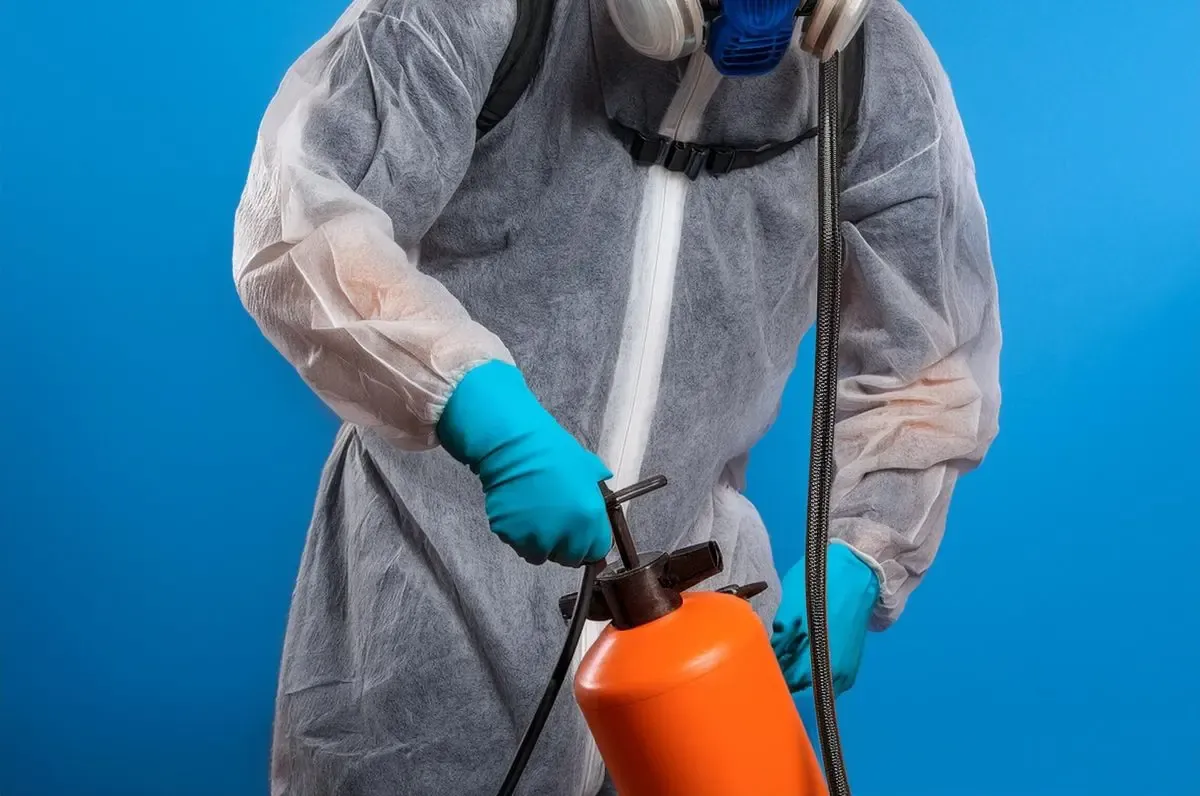
At Blades Pest Solutions, we provide a range of treatment options tailored to beetle and carpet beetle infestations. Depending on the severity and location of the problem, one or more of the following methods may be recommended: Insecticidal Sprays: For immediate relief, insecticidal sprays can be applied to areas where beetles and carpet beetles are most active. These sprays kill the insects on contact and can be particularly useful for treating infested carpets, furniture, and cracks in woodwork. Dusting Powders: Insecticidal dusts, such as diatomaceous earth or specialised beetle powders, can be applied to infested areas. These powders penetrate cracks and crevices where beetles may hide, killing them over time through dehydration. Heat Treatment: In certain cases, heat treatment may be recommended, particularly for large or heavily infested items. This method involves raising the temperature in infested areas or within affected items to levels that are lethal to beetles and larvae. Fumigation: For severe infestations, particularly in commercial or storage settings, fumigation may be necessary. This involves sealing the affected area and introducing a gas that is toxic to beetles and their larvae. Fumigation is effective for large-scale infestations but requires professional application and safety precautions. Ongoing Monitoring: After initial treatment, we offer ongoing monitoring services to ensure that the infestation has been fully resolved. This may include regular inspections and the use of traps to detect any remaining or returning beetles. Monitoring is especially important in areas where valuable textiles or stored products are kept.
Our expert advice
Blades Pest Solutions offers the following advice to help you manage and prevent beetle and carpet beetle infestations: Act Promptly: Both beetles and carpet beetles can cause significant damage to household items, particularly those made from natural materials. Early detection and action are crucial to preventing widespread damage. Maintain Cleanliness: Regular cleaning is essential, especially in areas where food is stored or where textiles are kept. Vacuum carpets, upholstery, and areas under furniture regularly to remove larvae and eggs. Pay special attention to dark, undisturbed areas where beetles and larvae may thrive. Inspect and Protect: Regularly inspect items made from natural fibres, such as wool and silk, for signs of damage. Consider storing susceptible items in sealed containers, especially if they are not frequently used. Ensure that windows, doors, and vents are well-sealed to prevent beetles from entering your home.
Keep them away
How to prevent beetles and carpet beetles
To prevent beetle and carpet beetle infestations, regularly clean and inspect your home, and store natural-fibre items in sealed containers when not in use.
Did you know
Beetle and Carpet Beetle facts
Diverse Group: Beetles make up the largest order of insects, with over 4,000 species found in the UK alone. Carpet beetles are a common household pest, particularly in homes with woollen carpets and natural-fibre furnishings. Life Cycle: Carpet beetles undergo complete metamorphosis, with distinct egg, larval, pupal, and adult stages. The larvae are the most destructive stage, feeding on a variety of natural materials. Damage: Carpet beetle larvae can cause significant damage to carpets, clothing, furniture, and stored products by feeding on natural fibres. Adult beetles are less harmful but can still be a nuisance in the home. Nocturnal Habits: Many beetle species are nocturnal, meaning they are most active at night. This can make infestations harder to detect until significant damage has occurred.
UK seasonality
When are beetles and carpet beetles most active in the UK?
Carpet beetles and many household beetles are active year-round indoors because centrally heated UK homes provide stable warmth that allows larvae to feed and develop through the winter, which is why heated buildings can show continuous low-level activity. However, there is a clear seasonal pattern in the UK. January-February: larvae continue feeding quietly in warm, undisturbed areas (airing cupboards, under furniture, lofts); little visible adult activity, but damage accumulates unseen. March: as temperatures and daylight rise, larvae begin to pupate; first emerging adults may appear. April-June: peak adult emergence and the most visible period — adult carpet beetles are commonly seen on windowsills and around windows as they seek to fly outdoors to feed on flower pollen and nectar, then mate and return indoors to lay eggs near suitable food sources (wool, lint, old nests). This spring-into-summer window is when most infestations are noticed and reported. July-August: continued adult activity and egg-laying; warm conditions accelerate larval development; bird nests vacated after the breeding season become reservoirs of larvae that migrate into living spaces. September-October: adult activity declines as it cools; new larvae settle in to feed and overwinter. November-December: outdoor activity ceases, but larvae remain active in heated interiors, feeding through winter. The annual cycle can complete in around 9-12 months in the UK, sometimes longer in cooler, unheated premises.
The law
UK law & beetle and carpet beetle control
There is no specific UK wildlife protection covering household beetles or carpet beetles, so unlike honey bees (relocated, not killed) or bats (protected under the Wildlife and Countryside Act 1981), these pests can be lawfully controlled. The key legal obligations fall on how treatment is carried out rather than on the species itself. All professional insecticides must be UK HSE-approved and applied strictly in accordance with the product label and statutory conditions of use under the Control of Pesticides Regulations (COPR) and the Plant Protection Products / Biocidal Products Regulations as retained in UK law. Technicians must hold appropriate certification and follow COSHH (Control of Substances Hazardous to Health) assessments for every product used. Where infestations affect food businesses, treatment must be compatible with the Food Safety Act 1990 and food hygiene regulations, and records kept. For rented or commercial properties, landlords and duty-holders have responsibilities under the Housing Act 2004 (HHSRS) and Workplace (Health, Safety and Welfare) Regulations. CRRU rodenticide stewardship does not apply, as this is an insect, not a rodent. Heat treatment and fumigation (where used for severe stored-product or museum/textile infestations) carry additional statutory controls: fumigation with substances such as those covered by the Gassing regulations requires specific competence, notification and exclusion-zone management. Any waste insecticide and contaminated material must be disposed of as controlled waste under the Environmental Protection Act 1990. Protected historic textiles or museum collections may require conservation-grade, non-residue methods to comply with heritage obligations.
Pricing
What affects beetle and carpet beetle control cost?
A professional quote is shaped by several factors rather than a fixed figure: (1) Species and correct identification — distinguishing varied carpet beetle from larder, biscuit, furniture (woodworm) or other stored-product beetles, as each requires a different treatment approach and informs the survey. (2) Severity and extent of the infestation — a localised problem in one room versus widespread activity across multiple rooms, lofts and cavities. (3) Size and type of property — number of rooms, floor area, residential versus commercial, and whether multi-occupancy. (4) Source identification and access — locating and removing hidden sources such as old bird or wasp nests in lofts, chimneys and wall cavities adds labour; difficult-to-access areas (under fitted units, behind heavy furniture, voids) increase time. (5) Treatment method required — residual insecticidal spray and crack-and-crevice dusting are standard, but heat treatment, prolonged programmes or fumigation for severe stored-product or heritage-textile infestations are more involved and costly. (6) Number of visits — many beetle treatments need follow-up visits and monitoring to break the life cycle and catch newly hatched larvae, so a single visit versus a multi-visit programme affects price. (7) Preparation and aftercare — extent of vacuuming, laundering, disposal of heavily infested items and any tenting or protection of belongings. (8) Value and sensitivity of affected items — treating museum-grade textiles, antiques or stored products may require specialist, low-residue methods. (9) Ongoing monitoring or prevention contracts, common for commercial, food-storage and heritage premises. (10) Urgency/out-of-hours call-outs and travel/location of the property. All work should be carried out by suitably qualified, RSPH-qualified technicians, which is reflected in the quote.
Local engineers
Beetle and Carpet Beetle control near you
We provide local beetle and carpet beetle control across the region, including:
Advice & guides
Beetle and Carpet Beetle advice & guides
Practical, expert reading on dealing with beetles and carpet beetles - from spotting the signs to safe, lasting treatment.
Identification
Carpet Beetles vs Bed Bugs: How to Tell Them Apart
Both turn up in bedrooms, but they are very different problems with very different fixes. Here is how to tell carpet beetles from bed bugs so you take the right action first time.
Read guidePests
How to Get Rid of Carpet Beetles
Carpet beetle larvae quietly chew holes in wool carpets, clothing and upholstery. Learn how to spot the early signs, find the source, and clear an infestation fast with proven professional treatment.
Read guide
FAQs
Beetle and Carpet Beetle control FAQs
- How do I get rid of beetles and carpet beetles fast?
- The fastest, most reliable route is a professional treatment. Blades Pest Solutions uses RSPH-qualified methods to eliminate beetles and carpet beetles at source, with same-day and 24/7 emergency appointments. Call 0800 037 7358.
- What are the signs of a beetle and carpet beetle infestation?
- Key signs to look for: (1) Damage to natural-fibre items — irregular holes, bare or threadbare patches in wool carpets (especially under furniture, along skirting boards, in dark undisturbed corners), holes in woollen jumpers, silk, fur, felt, and damage to upholstery. Unlike clothes-moth damage, carpet beetle holes are often accompanied by shed skins.
- Are beetles and carpet beetles dangerous to health?
- Beetles and carpet beetles are not significant disease vectors and pose a low direct health risk compared with rodents or cockroaches, but they are far from harmless. The principal risk from carpet beetles is allergic and irritant reactions caused by the larvae ("woolly bears").
- How much does beetle and carpet beetle control cost?
- A professional quote is shaped by several factors rather than a fixed figure: (1) Species and correct identification — distinguishing varied carpet beetle from larder, biscuit, furniture (woodworm) or other stored-product beetles, as each requires a different treatment approach and informs the survey. (2) Severity and extent of the infestation — a localised problem in one room versus widespread activity across multiple rooms, lofts and cavities.
- Are your beetle and carpet beetle treatments safe for children and pets?
- Yes. As a RSPH-qualified contractor we follow industry best practice and apply targeted treatments responsibly, so your family and pets stay safe.
- How quickly can you treat a beetle and carpet beetle problem?
- We offer same-day appointments and 24/7 emergency response for urgent beetle and carpet beetle infestations across our coverage area. Fully licensed & insured.
Got beetles and carpet beetles? We'll sort it - fast.
Speak to a local, RSPH-qualified engineer now. 24/7 emergency cover and same-day response.
Free quote · Same-day · 24/7 emergency