
5 min read · Blades Pest Solutions
Carpet beetles and bed bugs both have a habit of turning up in bedrooms, and at a glance an anxious homeowner can easily confuse the two. But they are completely different problems - one bites you in your sleep, the other quietly eats your carpets and clothes - and crucially they need different treatment. Getting the identification right first time means you act correctly instead of spraying the wrong area while the real infestation keeps spreading.
The quick answer
If you are waking up with itchy bites in lines or clusters, and you find tiny dark spots or rusty blood smears along your mattress seams and bed frame, you almost certainly have bed bugs. If instead you are finding small, clean, round holes in wool carpets, clothing and blankets - with no biting at night - you are looking at carpet beetles. Bed bugs feed on you; carpet beetles feed on your fabrics. That single distinction usually settles it.
Side-by-side comparison
| Feature | Carpet beetles | Bed bugs |
|---|---|---|
| Size & appearance | Adults small and oval, about 2-4mm, mottled black, white and tan. Larvae ("woolly bears") are tiny, hairy, brown-and-tan banded grubs up to about 5mm. | Flat, oval, reddish-brown insects about 4-5mm - roughly the size of an apple seed. Six legs, no functional wings. |
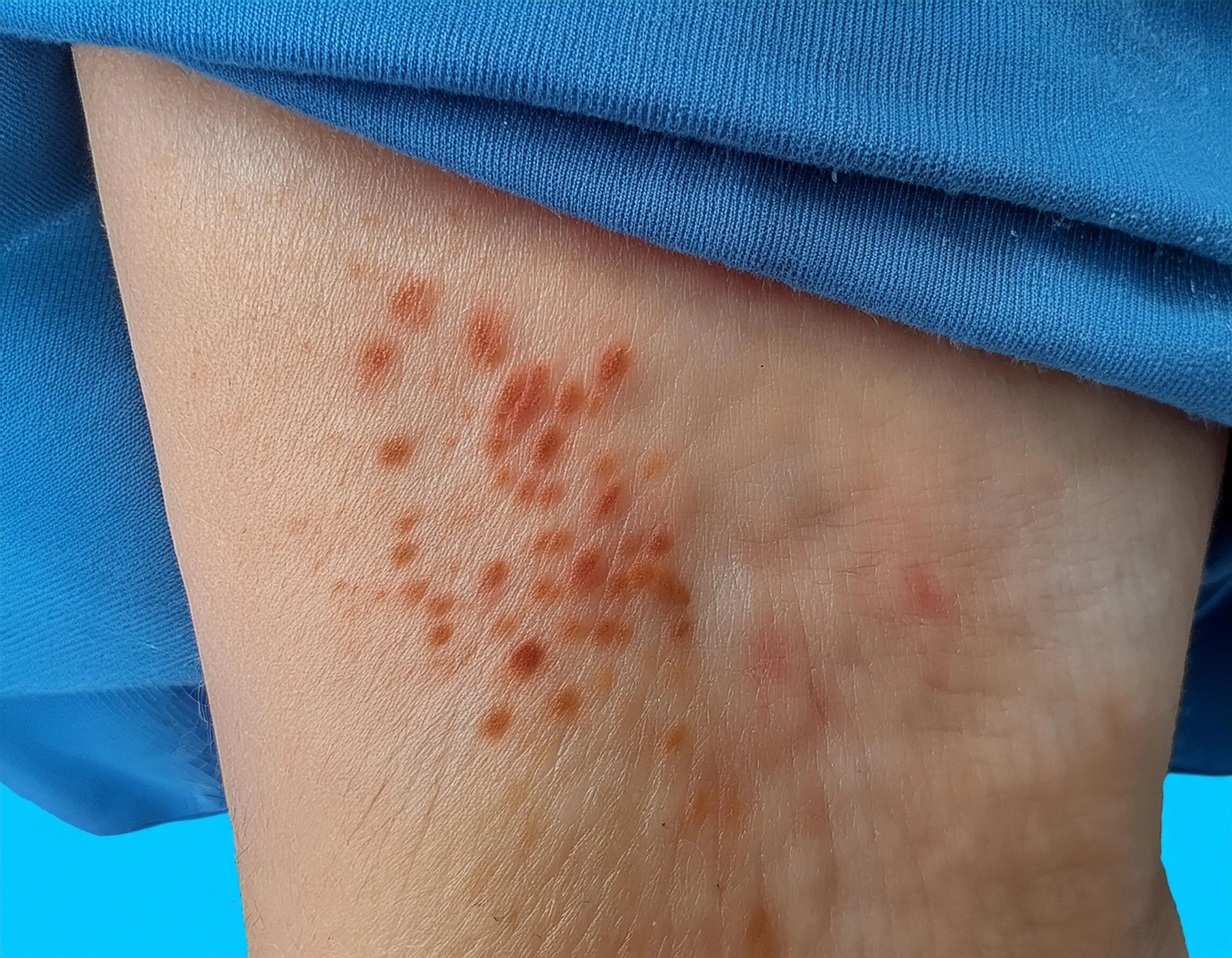
| Do they bite? | No. They do not bite or feed on blood. The larval hairs and shed skins can cause an itchy skin or allergy reaction in some people. | Yes. They bite at night, leaving red, itchy welts, often in a line or cluster on exposed skin. |
| Signs left behind | Clean round holes in fabrics (no webbing), fine powdery sand-like droppings, and cast brown larval skins. | Dark brown or black spots and rusty blood smears on bedding, pale shed nymph skins, clusters of tiny eggs, and a sweet musty almond-like odour in heavy cases. |
| Behaviour | Larvae feed on natural fibres in dark, undisturbed spots. Adults fly to windows and light in late spring and summer. | Nocturnal blood-feeders that hide in cracks and crevices by day and come out to feed at night. |
| Where found | Under carpets, behind skirting boards, in airing cupboards, in wardrobes and in old birds' nests in lofts. | Mattress seams, headboards, bed frame joints, skirting boards near the bed, and upholstered furniture. |
| Main risk | Damage to wool carpets, clothing, blankets, curtains and upholstery; possible skin or allergy irritation. | Itchy bites, lost sleep, anxiety and stigma; a real reputational risk for hotels and lettings. Neither spreads disease. |
How to tell which you have
The most reliable test is to follow the evidence rather than the panic. With bed bugs, the give-away is the combination of bites and bedding stains: look closely along the mattress seams, headboard, bed frame joints and nearby skirting for small dark spots (digested blood), rusty smear marks where a bug has been crushed, and pale shed skins. In heavier cases you may spot the flat, apple-pip-sized bugs themselves, clusters of pale eggs, or a distinctive sweet, musty odour. Because bed bugs are excellent hitchhikers, check luggage and second-hand furniture too.
Carpet beetles tell a different story. The classic sign is small, clean, round holes appearing in wool carpets, rugs, clothing, blankets and upholstery - often only noticed when garments come out of storage. Unlike clothes moths there is no silken webbing; instead you may find fine, sand-like droppings and the cast brown larval cases left as the "woolly bear" larvae moult. The hairy little larvae hide in dark, undisturbed places, while the small mottled adult beetles are commonly seen on windowsills heading for the light in late spring and summer. If the damage is to fabrics and nobody is being bitten, it is carpet beetles.
What to do next
Once you know what you are dealing with, the right action becomes clear - and it is different for each.
For bed bugs, the bed is the battleground. Established infestations breed quickly and rarely clear with DIY sprays, partly because bed bugs have developed resistance to some insecticides. A focused professional programme of targeted insecticide, steam and heat treatment, with monitoring to confirm it has worked, is far more reliable. Read more on our bed bugs pest page, or our step-by-step guide to getting rid of bed bugs.
For carpet beetles, treatment aims at the fabrics and the hidden larvae: carpets, upholstery, cracks, skirting and undisturbed areas, plus removing the source - for example clearing old birds' nests from the loft - to break the breeding cycle. Learn more on our carpet beetles pest page, or our guide to getting rid of carpet beetles.
Still not sure which one you have? That is exactly what we are here for. A quick call lets our RSPH-qualified, fully insured technicians point you in the right direction and agree a clear plan to put it right. Call Blades Pest Solutions free on 0800 037 7358 for honest advice and a free, no-obligation price.
FAQs
- Do carpet beetles bite like bed bugs?
- No. Carpet beetles do not bite, sting or feed on blood. What people sometimes mistake for bites is "carpet beetle dermatitis" - an itchy, irritant or allergic rash caused by contact with the larvae's tiny bristly hairs and shed skins. Bed bugs, by contrast, actively bite at night and leave red, itchy welts, often in a line or cluster.
- How can I tell which one is in my bedroom?
- Look for the evidence. Small, clean round holes in wool carpets, clothing and blankets - with no webbing - plus fine sand-like droppings point to carpet beetles. Tiny dark spots and rust-coloured blood smears along mattress seams, the headboard and bed frame, combined with bites when you wake, point to bed bugs.
- Does the same treatment work for both?
- No, and that is exactly why identification matters. Bed bugs centre on the bed and need a focused programme of insecticide, steam or heat treatment to break the breeding cycle. Carpet beetles need treatment aimed at carpets, fabrics, skirting and undisturbed areas, plus removal of the source such as old birds' nests in the loft. Treating for the wrong one wastes time while the real problem spreads.
- Are either of them dangerous?
- Neither spreads disease. Bed bug bites can be very itchy and cause sleep loss, anxiety and, rarely, secondary skin infections from scratching. Carpet beetles mainly damage natural-fibre carpets, clothing and upholstery, and can trigger an itchy skin or allergy reaction in some people. Both are worth resolving promptly.
- How much does treatment cost?
- It depends on the pest, the severity and the size of the property, so we never quote blind. Call Blades Pest Solutions on 0800 037 7358 for a free, no-obligation price once we know which pest you are dealing with.